

Reviewed · DELHI TOURS
Delhi Day Tour
Delhi can feel like overload at first. This Old and New Delhi day tour turns the sprawl into a smart 8-hour route with major sights, clear explanations, and an air-conditioned car.
What I like most is the focus on big, iconic stops without making you guess what to do next, plus the English-speaking guide who keeps the day moving. The one thing to consider is that lunch isn’t included, so you will want a plan before you get hungry.
In This Review
- Key Points That Matter Before You Go
- Why This Delhi Day Tour Feels Efficient, Not Rushed
- Qutub Minar: Mughal Majesty in 5 Levels
- Lotus Temple: Marble Petals and a Religions-First Message
- Humayun’s Tomb: Mughal Style With a Story-Driven Feel
- British New Delhi: India Gate, Parliament House, and Rashtrapati Bhavan
- India Gate: A WWI Memorial Wall of Names
- Parliament House: Lutyens and Baker, 1912
- Rashtrapati Bhavan: The Viceroy’s House, Until 1950
- Red Fort and the Walls of Old Delhi
- Jama Masjid: Precision, Capacity, and Real-World Sacred Space
- Chandni Chowk: The Old Delhi Market Stop for Food and Noise
- Raj Ghat: A Quiet Ending at Gandhi’s Memorial
- Getting Around in an 8-Hour Rhythm: Comfort, Stops, and Flow
- Price and What You Really Get for About $29.87
- Guide Service That Gets Praised: Vijay and Kapil
- What to Watch For: Timing, Crowds, and Lunch
- Who This Tour Fits Best
- Should You Book This Delhi Day Tour?
- FAQ
- What is the duration of the Delhi Day Tour?
- What time does the tour start?
- Is pickup included?
- What major sites are included?
- What’s included in the price?
- Is lunch included?
- Does the tour require good weather?
- Can I cancel and get a full refund?
Key Points That Matter Before You Go

- A tight 8-hour mix of New Delhi and Old Delhi so you get both British-era monuments and Mughal-era landmarks in one day
- English-speaking guidance plus water bottles and an air-conditioned vehicle for Delhi heat and traffic
- A strong monument lineup including Qutub Minar, Humayun’s Tomb, Red Fort, Jama Masjid, and Raj Ghat
- Service that gets praised by name, with Vijay and Kapil mentioned for being attentive and helpful
- Old Delhi crowd reality at Chandni Chowk and Jama Masjid, so wear comfortable shoes
- Good weather is required, and the route may change if conditions are poor
Why This Delhi Day Tour Feels Efficient, Not Rushed
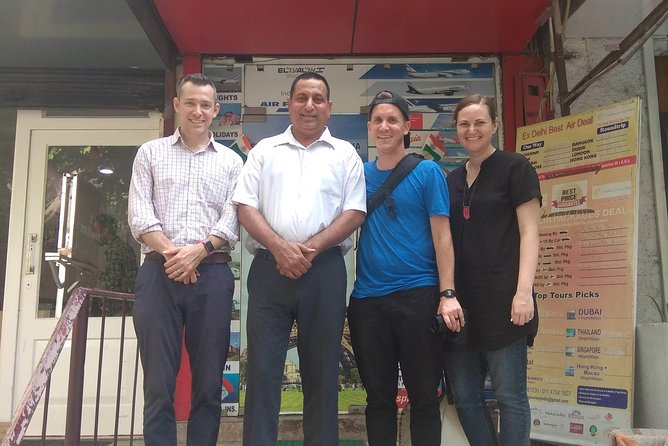
Delhi is a city of layers. In one day, you can’t master all of it, but you can get your bearings fast. This tour does that by pairing New Delhi’s British-planned monuments with Old Delhi’s Mughal landmarks and markets.
For the price point, the value comes from what you do not have to manage. You get an air-conditioned vehicle, tolls and parking handled, and an English-speaking guide to explain what you are seeing. That matters in Delhi, where traffic, distances, and confusion can easily eat your day.
You also avoid the common problem of staring at maps while your legs go numb. The route is designed as a circuit, with major stops spread across both sides of the city, plus a mix of drive-past moments and time on-site.
A few more New Delhi days to compare
- Old & New Delhi City Tour – Half or Full Day Options Available
★ 5.0 · 4,811 reviews - Half Day Private Delhi City Tour
★ 5.0 · 4,474 reviews - Same Day Taj Mahal, Agra Fort & Baby Taj Tour from Delhi by Car
★ 5.0 · 4,304 reviews
Qutub Minar: Mughal Majesty in 5 Levels
The day often starts with Qutub Minar, one of Delhi’s most recognizable symbols from the Mughal era. It is described as the tallest Mughal dynasty structure, built in the 13th century under Allauddin Khilji, with a tower that rises through 5 levels.
What makes this stop worth your time is the scale. Even when you have seen photos, the height hits differently in person. If you are the type who likes to understand where a city’s identity comes from, Qutub Minar gives you a strong anchor point before you head into later Mughal sites.
Practical tip: bring sun protection. Delhi sun can be intense, and this is a place where shade is limited at certain viewing areas. Wear breathable clothing and keep water handy, even though your tour includes bottles.
Lotus Temple: Marble Petals and a Religions-First Message
Next comes the Lotus Temple, famous for its striking design made with 27 kinds of marble petals forming lotus clusters. The temple concept is built around the idea that all religions belong together as one.
This is not just about photos. It is a pause in the middle of a packed day, where you can slow down and take in how Delhi expresses spirituality in a modern landmark. The architecture also gives you an easy way to see details without needing long explanations.
If you care about contrast, this stop works well after Qutub Minar. You go from a towering, older Mughal structure to a modern interpretation of sacred form, all while staying within the same cultural thread.
Humayun’s Tomb: Mughal Style With a Story-Driven Feel

Then you move into Mughal territory with Humayun’s Tomb, built in the 16th century by Haji Begun, described here as the wife of a Mughal emperor. You also get a clear note that it displays Mughal characteristics, which helps you look with purpose instead of just taking in scenery.
This stop is especially good if you like royal-era architecture. Humayun’s Tomb can feel like a “Mughal gateway” to the rest of the day, because it sets expectations for the symmetry, gardens, and monumental style you will see again later.
Practical tip: plan for time on your feet. Tomb complexes usually require walking between viewpoints, and your day is already packed with several major landmarks.
Another way to spend a day in India:
- Taj Mahal Day Tour from Delhi by Superfast Train – TOP RATED TOUR
★ 5.0 · 4,166 reviews - Full Day Taj Mahal, Agra Fort & Baby Taj Tour from Delhi by Car
★ 5.0 · 3,647 reviews - From Delhi: Taj Mahal & Agra Private Day Trip with Transfers
★ 4.9 · 3,181 reviews - Taj Mahal Tour from Delhi by Express Train (Viator Award Winner)
★ 5.0 · 2,849 reviews
British New Delhi: India Gate, Parliament House, and Rashtrapati Bhavan

This tour does a smart thing: it shifts you into New Delhi’s British-designed core. The stops here give you a different lens on Delhi, more formal and planned, with grand public buildings built during the colonial period.
India Gate: A WWI Memorial Wall of Names
India Gate is a memorial to 70,000 soldiers of the Indian Army who died between 1914 and 1921 in the First World War. It is a moving stop that turns a large monument into something human, and it also helps you understand how Delhi remembers history in public spaces.
When you stand there, the scale can be surprising. This is one of those places where you can spend a short moment or a longer one, depending on your interest in memorials and military history.
Parliament House: Lutyens and Baker, 1912
Next is Parliament House, also called Sansad Bhavan. It was built and designed by British architects Sir Edwin Lutyens and Sir Herbert Baker back in 1912. That date matters because it places the building in the colonial-era transformation of New Delhi.
Even if you do not care about architecture, the guide’s context helps you spot why the building looks the way it does. It is not random. It comes from a very specific planning mindset.
Rashtrapati Bhavan: The Viceroy’s House, Until 1950
Then you reach Rashtrapati Bhavan, described as the President’s House, or President’s Palace. It was designed by Lutyens and Baker, and it was known as the Viceroy’s House until 1950.
This stop closes the British-era loop. You are seeing how power symbols evolved over time in the same city grid. It also gives you one more chance to observe the contrast between broad avenues and the more enclosed feel of Old Delhi.
Practical tip: bring layers. You may start the day cool and then warm up, and the open-air feeling of New Delhi streets can change quickly.
Red Fort and the Walls of Old Delhi
Back in Mughal time, Red Fort is built by Mughal emperor Shah Jahan. Even from a distance, Red Fort communicates weight and authority, and it is one of those sights where the architecture basically does the talking.
The payoff here is that you are not only seeing a monument, you are stepping into the idea of Delhi as a seat of empire. This is also a nice bridge from the British-planned monuments, because you can feel the shift from civic space to imperial stronghold.
If crowds build up, you may want to move slowly and let the guide point out the best viewing angles. This is where patience helps. Rushing tends to turn a great landmark into a blur.
Jama Masjid: Precision, Capacity, and Real-World Sacred Space
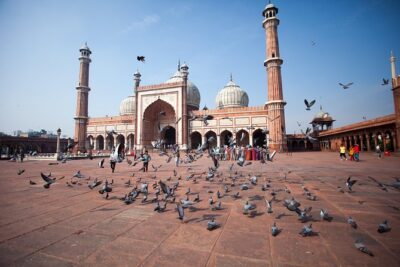
Then you hit a major Old Delhi centerpiece: Jama Masjid. It was founded as Shahjahanabad by the Mughal emperor Shah Jahan and maintained the Mughal character into modern times, at least in some forms.
One detail that makes Jama Masjid feel concrete is its scale and precision. The courtyard can accommodate 25,000 people at a time, including during Eid days. That number is your key to understanding why this mosque is not a small neighborhood stop, it is a central pillar of worship for the city.
This is also a place where etiquette matters. Even if you do not know the rules perfectly, the guide can help you understand what to do on arrival, and you will want to dress respectfully. Comfortable clothing makes this easier, because you may stand in line depending on the time of day.
Chandni Chowk: The Old Delhi Market Stop for Food and Noise
Next is Chandni Chowk, described as the oldest market of Delhi with numerous food shops. This is a sensory stop, and that is the point. It gives your day more texture than monuments alone.
You can treat Chandni Chowk like a strolling street market. You might look, take in the atmosphere, and then decide how much time to spend depending on how you handle crowds. Either way, this stop helps you connect the historic city to everyday Delhi life.
Practical tip: protect your feet and your patience. This area can be tight and busy, and you will cover ground between stalls and side streets.
Raj Ghat: A Quiet Ending at Gandhi’s Memorial
To close the day, you reach Raj Ghat, the cremation ground of national father Mahatma Gandhi. You may visit Raj Ghat or drive past it, which means the exact experience can vary based on timing.
This stop works as a reset after the busy energy of market streets. It is usually calmer, more reflective, and a reminder that Delhi is not only about empires and monuments. It is also about modern national identity and memory.
If you are sensitive to solemn spaces, go in with a slower pace. The best moments here usually come from silence and time, not from rushing for a photo.
Getting Around in an 8-Hour Rhythm: Comfort, Stops, and Flow
The tour is about 8 hours and starts at 9:00 am. Delhi in the morning can be easier than later in the day, especially for getting between clusters of landmarks. Still, you should expect traffic to influence the exact timing at each stop.
The good news: you ride in an air-conditioned vehicle, and you get water bottles. That reduces the usual friction of a long day, especially when you are moving between New Delhi and Old Delhi.
Because it is a private tour/activity, only your group participates. That usually makes the day feel smoother than joining a larger mixed crowd tour, since you are not fighting for guide attention.
Price and What You Really Get for About $29.87
At $29.87 per person, the value mostly comes from logistics and interpretation. You get an English-speaking guide, air-conditioned transport, water bottles, plus toll tax and parking taken care of.
What is not included is lunch and alcoholic beverages. That matters because food is often the hidden cost of a day like this. If you go in hungry, you might spend extra time buying meals between stops instead of enjoying the sights.
For me, the smartest way to judge this price is simple. Ask yourself whether you would rather pay for a guided route and AC comfort, or handle transport and timing on your own. When you are trying to fit major monuments into one day, a well-run guide route usually wins.
Guide Service That Gets Praised: Vijay and Kapil
The strongest repeated theme is the human factor. The service gets praised for being friendly and personal, and guide names show up clearly, including Vijay. He is described as fun, attentive, and willing to go out of his way to make sure you have the best experience.
Drivers also get mentioned, including Kapil, described as kind and helpful, always checking that you are comfortable and that you see what you want. That kind of attention matters in Delhi, where your comfort is often tied to timing and route choices.
If you appreciate good teamwork, this is one reason this tour earns its high rating. You are not just buying tickets to monuments, you are buying a day managed well.
What to Watch For: Timing, Crowds, and Lunch
This day covers a lot. Even when stops are well planned, your body will feel it. Wear comfortable shoes and keep your phone charged, because you will want photos at multiple landmarks.
Crowds are a reality at Jama Masjid and Chandni Chowk, and those are not short photo opportunities. You might spend more time than expected just navigating and waiting for the best moments.
Also, plan for food. Since lunch is not included, decide whether you want to eat near a specific stop or ask your guide for practical suggestions during the day. Having that plan keeps you from turning the route into a long wait for the next meal.
Who This Tour Fits Best
This tour fits best if you want:
- A guided 8-hour route that hits both Old and New Delhi in one go
- Clear explanations of major landmarks, not just sightseeing
- Air-conditioned comfort during long road stretches
- A private setup where your group can move at a pace that makes sense
It is also a good choice for first-time visitors who want to reduce guesswork. If you already know Delhi well and want offbeat neighborhoods, you might prefer a different style of tour. But for a first “major highlights” day, this one makes a lot of sense.
Should You Book This Delhi Day Tour?
I would book it if you want a guided, no-stress tour day that turns Delhi’s biggest landmarks into a coherent route. The included air-conditioned transport, water bottles, and English-speaking guide do real work, especially when the city can be confusing at street level.
I would think twice if you hate long days or you need lunch provided. Bring a small backup plan for meals, and you will be happier.
If your goal is to see Qutub Minar, Lotus Temple, Humayun’s Tomb, Red Fort, Jama Masjid, and then end with Raj Ghat, this tour gives you exactly that, with service that people repeatedly describe as careful and friendly.
FAQ
What is the duration of the Delhi Day Tour?
It runs for about 8 hours.
What time does the tour start?
The start time is 9:00 am.
Is pickup included?
Pickup is offered.
What major sites are included?
The tour covers Qutub Minar, Lotus Temple, Humayun’s Tomb, India Gate, Parliament House, Rashtrapati Bhavan, Red Fort, Chandni Chowk, Jama Masjid, and Raj Ghat (visit or drive past).
What’s included in the price?
You get an air-conditioned vehicle, water bottles, an English-speaking guide, and toll tax and parking.
Is lunch included?
No, lunch is not included.
Does the tour require good weather?
Yes, this experience requires good weather. If canceled due to poor weather, you will be offered a different date or a full refund.
Can I cancel and get a full refund?
Yes. You can cancel up to 24 hours in advance for a full refund. If you cancel less than 24 hours before the start time, the amount paid is not refunded.
Recently added around New Delhi
- Create Your Own: Customisable Private Day Tour of Delhi by Car★ 4.5 · 18 reviews
- Full Day Delhi Sightseeing Tour by Public Transport★ 5.0 · 18 reviews
- Delhi: Explore Old Delhi on Tuk Tuk with Shopping and Street Food★ 5.0 · 13 reviews
- Delhi & Taj Mahal Private Day Tour with Lunch and Tickets★ 5.0 · 16 reviews
- Delhi by Evening Tour with Private AC Car, Guide & Dinner★ 4.0 · 11 reviews
- Taj Mahal Same Day Tour by India’s Fastest Train★ 5.0 · 43 reviews
- Delhi To Agra Private Transfer★ 3.5 · 9 reviews
- New Delhi Private Tour with Transportation★ 5.0 · 9 reviews
Delhi Tours, compared.
Old & New Delhi City Tour – Half or Full Day Options Available
Read our review →

Same Day Taj Mahal, Agra Fort & Baby Taj Tour from Delhi by Car
Read our review →
Taj Mahal Day Tour from Delhi by Superfast Train – TOP RATED TOUR
Read our review →
Full Day Taj Mahal, Agra Fort & Baby Taj Tour from Delhi by Car
Read our review →
Taj Mahal & Agra Private Day Trip with Transfers
Read our review →
Taj Mahal Tour from Delhi by Express Train (Viator Award Winner)
Read our review →