Reviewed · OLD DELHI TOURS
Chandni Chowk Old Delhi Food Tour with Spice Market
Chandni Chowk hits fast, and this tour keeps you from getting tangled. I love the guided flow through winding lanes, and I love that you get real vegetarian street food snacks plus refreshments instead of just seeing markets from the edge. A fair consideration is that this is still a crowded, walking-focused experience, so comfy shoes matter.
You’ll spend about three hours moving between iconic stops in Old Delhi, with a fun cycle rickshaw ride thrown in, and you stay in a small group (up to 20). You also get a mobile ticket, and it runs only when weather cooperates.
In This Review
- Key highlights to look for
- Why this Chandni Chowk food tour works in a maze of lanes
- Price and what $45 buys you in practice
- Getting around on foot, then by cycle rickshaw
- Digambar Jain Lal Mandir: gold-plated art and a birds hospital
- Gurudwara Sis Ganj Sahib and Langar, the free kitchen rhythm
- Khari Baoli: Asia’s biggest spice market and 1,000 shops
- Gadodia Market: the rooftop view and a small spice-village feel
- Kinari Bazar: wedding supplies, women’s decor, and Naughara havelis
- The famous street stop: what to expect
- Vegetarian street food snacks, plus coffee or tea
- Weather, timing, and the temple closure detail
- Who this tour suits best
- The guide factor: communication that makes food make sense
- Should you book this Chandni Chowk food tour?
- FAQ
- How long is the Chandni Chowk Old Delhi Food Tour with Spice Market?
- What is included in the tour price?
- Is the food on this tour vegetarian?
- Which main places and markets do you visit?
- Is shopping included?
- What is the cancellation policy?
Key highlights to look for
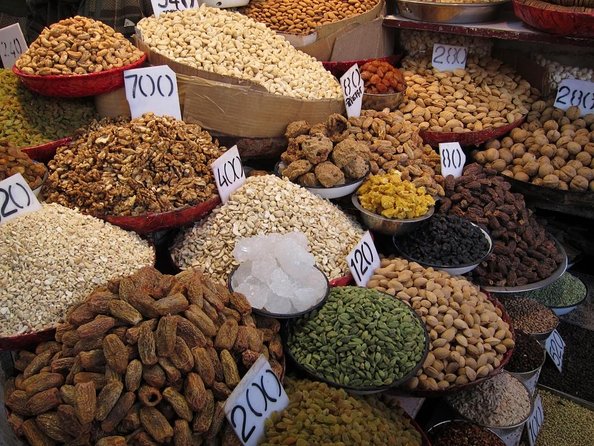
- Khari Baoli spice market with 1,000-plus shops, packed with spices and daily trade energy
- Gurudwara Sis Ganj Sahib and Langar meal tradition, including free kitchen service for daily crowds
- Digambar Jain Lal Mandir (built in 1656), known for gold-plated painting and a birds hospital
- Cycle rickshaw ride that helps you see more without wearing yourself out too early
- Kinari Bazar wedding bazaars plus visits to 350-years-old Naughara havelis
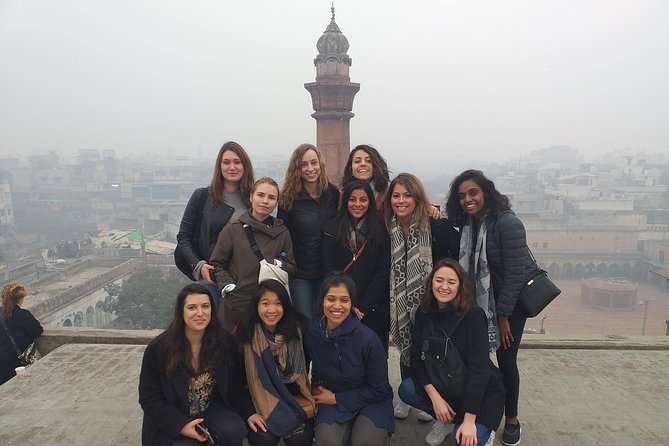
- Rooftop views from Gadodia Market that give you a birds-eye perspective over Old Delhi
Why this Chandni Chowk food tour works in a maze of lanes
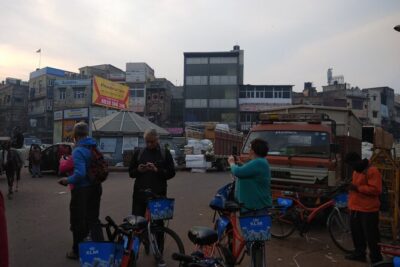
Old Delhi does not do quiet sightseeing. Even on a normal day, the lanes around Chandni Chowk feel like they are moving at their own speed, and it’s easy to lose the plot when you’re trying to read signs, dodge traffic, and follow your appetite at the same time.
This tour is built for that reality. A guide helps you keep momentum and avoid the classic problem of wandering into a lane that looks right but leads nowhere useful. You also get a planned sequence of markets and monuments, so you’re not stuck guessing what’s worth your time when everything smells amazing.
If you like learning while you eat, you’ll get that too. Guides on this route tend to explain what you’re trying and what makes the place special, which turns random street snacks into a story you can actually remember.
More Food Tours in Delhi
- The Great Indian Food Tour: Old Delhi Food and Heritage Walk
★ 5.0 · 1,698 reviews - Old Delhi Food, Heritage&Cultural Walk with Rickshaw ride to Masterji Kee Haveli
★ 5.0 · 742 reviews - Old Delhi Street Food Tour
★ 5.0 · 497 reviews
Price and what $45 buys you in practice
At $45 per person for about three hours, the headline value is not just “a guide.” The ticket includes coffee or tea, vegetarian street food snacks, and a cycle rickshaw ride. That matters because it covers the three things people usually spend extra money and effort on during solo wandering: a reliable local path, guided tasting, and transportation through the worst of the bottlenecks.
Shopping is not included, so don’t plan this as a bargain-hunt package. But you will get enough exposure to spice and wedding markets that you can decide on the spot whether you want to buy, snack more on your own later, or just enjoy the sights.
Given the small group size (up to 20), you’re also less likely to feel like you’re swallowed by the crowd. You stay close enough to see what your group is doing without constantly turning around to find your next landmark.
Getting around on foot, then by cycle rickshaw
You’re mostly on foot in a busy area, which is the point, because Old Delhi is a hands-on place. But you still get strategic help from the included cycle rickshaw ride. That ride is the nice reset button when you’ve been walking and negotiating crowds for a while.
What I like about this mix is pacing. You do enough walking to experience the markets properly, then you get a quick change of rhythm before heading into the next stop. It’s a smart way to handle three hours without arriving completely wrung out.
Digambar Jain Lal Mandir: gold-plated art and a birds hospital
One of the most memorable stops is Digambar Jain Lal Mandir, built in 1656. The building is noted for gold-plated painting, which is exactly the kind of detail you’ll miss if you only skim for street food.
There’s also a birds hospital here, which gives the temple a practical side beyond the usual worship focus. That combination, art plus animal care, helps you understand how religious spaces often function as community spaces, not just photo backdrops.
One key planning note: this temple is closed from 12 PM to 5 PM. If your tour timing overlaps those hours, you’ll want to be ready for how the visit is handled. I’d also keep an eye on the time window before you arrive, especially if you’re squeezing the tour between other Delhi plans.
More Market Tours in Delhi
- Delhi Food Walk: Rickshaw Ride, Street Eats & Market Tour
★ 5.0 · 401 reviews - Old Delhi Food-Spice Market-Temples Tour Soon Featured on NETFLIX
★ 5.0 · 304 reviews - Old Delhi Odyssey: A Tour of Religion, Spice Market, & Best Food
★ 5.0 · 284 reviews - Old Delhi & Spice Market Tour
★ 5.0 · 98 reviews
Gurudwara Sis Ganj Sahib and Langar, the free kitchen rhythm
Next up is Gurudwara Sis Ganj Sahib, dedicated to the Ninth Guru Teg Bahadur. This is one of those stops that changes how you think about what you’re seeing, because it’s less about shopping and more about daily life and service.
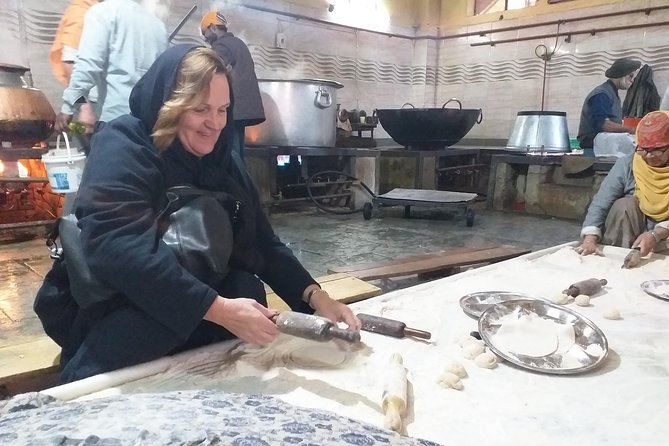
You’ll visit the Langar, the free kitchen where more than 10,000 people eat every day. That number is big enough that it’s hard to grasp until you’re in the flow of how it works. Even if you keep your visit respectful and quiet, the scale makes the point.
You can also do some service during the experience. That’s a powerful difference versus most tours that simply observe. Here, the tradition encourages participation in small ways, and it’s a reminder that faith in this area is lived, not just performed for visitors.
Khari Baoli: Asia’s biggest spice market and 1,000 shops
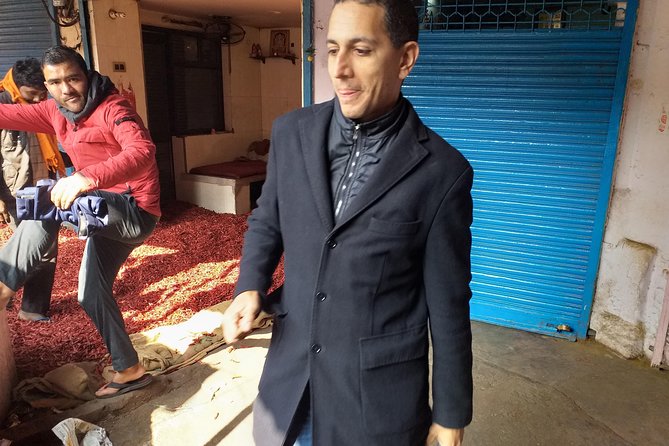
If you want a sensory overload that still feels structured, Khari Baoli is where you’ll get it. This is described as Asia’s biggest spice market, with more than 1,000 shops.
In practical terms, what you’re looking at is not one neat “spice store.” It’s a full working market where people come to buy in bulk, barter, and restock. That changes how you experience spices. They’re not just souvenirs, they’re tools of daily cooking and trade.
A guide helps here because it’s easy to get distracted by the sheer amount of choices. When someone explains what you’re seeing, you start noticing patterns, like which spices are common in certain vendor stalls, or how different shops present their goods. It makes the market feel less chaotic and more like a living system.
Gadodia Market: the rooftop view and a small spice-village feel
Gadodia Market is tied closely to the larger spice world, but it feels quieter and more residential. It’s described as an old haveli of Old Delhi and a part of the spice market, where people live and work.
That matters. Markets that only sell to visitors can start to blur together. Here, you’re getting more of that everyday mix, where homes and work overlap. It helps you picture what the area is like beyond market hours.
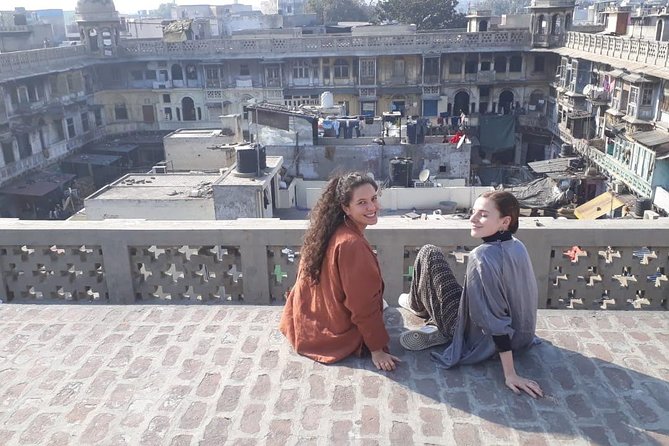
The highlight is a rooftop visit for a birds-eye view of Old Delhi. That gives your brain a chance to reset, especially after navigating tight lanes. You see the scale of the area, and you can connect where you’ve been to where everything is in relation to everything else.
If you enjoy viewpoints, this is a stop worth paying attention to, even if you normally skip “lookouts.” The rooftop framing helps you understand the geography of Old Delhi in a way that ground-level walking can’t.
Kinari Bazar: wedding supplies, women’s decor, and Naughara havelis
Kinari Bazar is a wedding-focused market. It’s known for decorative items, women’s dresses, and home decoration, which makes it feel different from the spice-first energy of Khari Baoli.
This stop also includes visits to havelis called Naughara, described as 350 years old. That’s a big part of the value here. You’re not only shopping for what you can carry. You’re stepping into architecture that shows how wealth, crafts, and domestic life were arranged.
Drawback to keep in mind: wedding markets can turn into a sensory sprint of color and display. If you get overwhelmed easily by dense visual clutter, take a breath between alleys, and focus on one or two things your guide points out. That keeps the stop enjoyable rather than exhausting.
The famous street stop: what to expect
Besides the named markets and monuments, you’ll also get time on one of Old Delhi’s famous streets. Since the exact street name isn’t specified here, treat this as a flexible transition moment in the route.
This kind of stop is useful for two reasons. First, it gives you a slice of the street life that connects everything. Second, it often helps your guide reposition the group smoothly between major locations without leaving you stranded in an unplanned lane.
Vegetarian street food snacks, plus coffee or tea
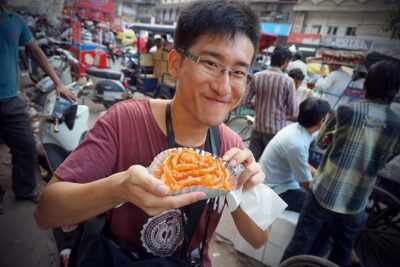
Let’s talk food, because that’s the whole reason people book this. You’ll have vegetarian street food snacks plus coffee or tea included. That’s a practical combo for Old Delhi walking because it gives you energy without requiring a full sit-down meal.
What makes a guided tasting work is not the food itself, it’s the context. With a good guide, you’ll understand what you’re eating and why locals like it. Names matter less than learning how ingredients, spices, and cooking styles connect back to the markets you just saw.
One thing I suggest: pace your eating. Street snacks can stack up quickly, and you’ve got multiple stops ahead. Take small bites at each tasting so you can keep your mouth fresh for the next round, and you’ll enjoy more without feeling stuffed.
Also, shopping is not included, so think of snacks as your “safe win” during the tour. If you want to buy ingredients or packaged items, do it after you’re done tasting, when you have clearer preferences.
Weather, timing, and the temple closure detail
This experience requires good weather. In Old Delhi, that can mean sunny enough conditions to make walking pleasant and to keep the schedule smooth across tight streets.
Timing matters most for Digambar Jain Lal Mandir because it’s closed from 12 to 5 PM. If you’re trying to line this up with midday plans, plan around that window rather than assuming every stop is always accessible on arrival.
If your tour start time lands outside those closure hours, you’ll likely get the full benefit of that stop. If not, be ready for a shorter or adjusted visit. That’s not a deal breaker, but it is worth knowing so you don’t feel surprised when the day’s rhythm changes.
Who this tour suits best
This tour is a great fit if you want:
- a guided way to explore Chandni Chowk without getting lost in the lanes
- vegetarian street food snacks with explanations that make the tastings smarter
- a short, intense three-hour snapshot of Old Delhi markets and monuments
- a small-group feel (up to 20) with an included cycle rickshaw ride
It’s also a good match for people who rely on their phone for navigation and coordination. The “mobile ticket” is included, and the whole experience is organized so you’re not doing mental gymnastics to keep up.
It may be less ideal if you struggle with dense crowds or long stretches of walking, because this is still a crowded walking route through active markets.
The guide factor: communication that makes food make sense
The best part of this kind of tour is the guide, because Old Delhi can overwhelm your senses fast. The tour is designed so that your guide helps you move through busy lanes and makes each tasting understandable.
In particular, guides such as Gajendra and Achaleshwar are mentioned for friendliness, clear communication, and taking people through winding streets while explaining what they’re eating. That style is exactly what you want on this route. It turns the tour into more than a snack run.
When you’re booking, look for signs that the guide leads discussion, not just footsteps. If you ask questions, this tour’s format tends to support that. And if you want practical tips for what to try or what to avoid in the area, a communicative guide can help a lot.
Should you book this Chandni Chowk food tour?
I think this is a smart booking if your goal is to experience Chandni Chowk the efficient way, without turning your trip into a navigation puzzle. For $45, you get a guided route, vegetarian street snacks and refreshments, and a cycle rickshaw ride, which is a lot for three hours.
I’d skip it or choose a different style if you need a quiet, slow museum pace, or if crowded walking sounds like misery. Also, if your schedule forces you into the midday temple closure window, double-check how your timing aligns with that.
Overall, this tour feels like good value because it connects markets, food, and places of worship in a single loop. If you want to leave Old Delhi knowing not just what you ate, but how the markets and traditions connect, you’ll likely enjoy it.
FAQ
How long is the Chandni Chowk Old Delhi Food Tour with Spice Market?
It lasts about 3 hours.
What is included in the tour price?
Coffee and/or tea, vegetarian street food snacks, and a cycle rickshaw ride are included.
Is the food on this tour vegetarian?
Yes. The tour includes vegetarian street food snacks.
Which main places and markets do you visit?
You visit Digambar Jain Lal Mandir, Gurudwara Sis Ganj Sahib (including Langar), Khari Baoli spice market, Gadodia Market, Kinari Bazar, and one famous street in Old Delhi.
Is shopping included?
No. Shopping is not included.
What is the cancellation policy?
You can cancel for free up to 24 hours in advance for a full refund. If you cancel less than 24 hours before the start time, the amount paid is not refunded.
More Street Food Tours in Delhi
- Old Delhi Street Food Tour – Explore Spices in Chandni Chowk
★ 5.0 · 334 reviews - Chandni Chowk Delhi Food Tour with 15+ Tastings
★ 5.0 · 285 reviews - The Legendary Delhi Belly Food Tour
★ 5.0 · 169 reviews - Evening Food Tour
★ 5.0 · 88 reviews
More Shopping Tours in Delhi
- Customized Half Day or Full Day Delhi Shopping Tour with Female Consultant
★ 5.0 · 273 reviews - Private Customized Delhi Shopping Tour with Female Consultant
★ 5.0 · 160 reviews - Private Full Day Shopping Tour in New Delhi
★ 5.0 · 150 reviews - Local Market Tour & Five Course Meal Class
★ 5.0 · 62 reviews
Recently added around New Delhi
- Local Market Tour & Five Course Meal Class★ 5.0 · 62 reviews
- Food Tour With Cooking Class in Local Village from Delhi★ 4.5 · 18 reviews
- Lodhi Garden Heritage Walk★ 5.0 · 7 reviews
- Old Delhi tour with a Local★ 5.0 · 8 reviews
- Delhi Footsteps of Mahatma Gandhi Half-Day Tour★ 4.5 · 35 reviews
- Old Delhi street Food Tour & spice market- For Indian food lover★ 5.0 · 10 reviews
- PRIVATE LUXURY KASHMIR TOUR 7 Nights 8 Days★ 4.5 · 6 reviews
- Delhi private City Tour: Explore Old and New Delhi full day★ 5.0 · 9 reviews
Old Delhi Tours, compared.
The Great Indian Food Tour: Old Delhi Food and Heritage Walk
Read our review →
Old Delhi Food, Heritage&Cultural Walk with Rickshaw ride to Masterji Kee Haveli
Read our review →
New Delhi and Old Delhi Private Tour 4-8 Hours – Customizable
Read our review →
Old Delhi Street Food Tour – Explore Spices in Chandni Chowk
Read our review →