
Reviewed · GOLDEN TRIANGLE TOURS
9 – Days Private Golden Triangle Tour with Khajuraho & Varanasi
Nine days, five eras, one tight route. I like how it blends the Golden Triangle classics with Khajuraho temple sculpture and Varanasi’s riverside rituals, all on a single organized flow. It is a big cultural sampler, but it stays practical.
You also get real comfort and guidance: a private English-speaking guide in Delhi, Jaipur, Agra, Khajuraho, and Varanasi, plus a private, air-conditioned chauffeur for the road days. I especially like the included add-ons that help you see more, with less hassle, like a jeep safari for Amer Fort and a rickshaw ride through Chandni Chowk.
One thing to plan around is cost and timing: entrance fees are not included (budget about $100 per person), and the Taj Mahal is closed every Friday. If your trip lands on a Friday, you will want the rest of the day to be flexible.
In This Review
- Key highlights to know before you go
- Price and logistics: what $683 really covers
- Day 1 in New Delhi: airport welcome and a low-stress start
- Day 2: Old Delhi, Chandni Chowk rickshaw, Humayun’s Tomb, India Gate, Qutub Minar
- Red Fort area and Old Delhi market time
- Humayun’s Tomb: Mughal architecture with breathing room
- Rashtrapati Bhavan and India Gate photo-and-stroll zone
- Qutub Minar: fast, tall, and historically grounded
- Day 3: checkout and drive to Jaipur
- Day 4 in Jaipur: Amer Fort jeep safari, Hawa Mahal, City Palace, Jantar Mantar
- Amer Palace and the jeep safari climb
- Jal Mahal: quick, pretty, and easy
- Hawa Mahal: fast exterior moment with big impact
- City Palace: architecture and courtyards
- Jantar Mantar: astronomy in stone
- Day 5: Agra arrival, Taj Mahal and Agra Fort
- Agra travel and hotel check-in
- Taj Mahal: why this stop is worth structuring your trip around
- Agra Fort: Akbar’s power view
- Day 6: train to Jhansi, then onward to Khajuraho via Orchha
- Day 7 in Khajuraho: Western and Eastern Group temples
- Western Group of temples
- Eastern Group temples
- Day 8: Varanasi arrival, Sarnath, Kashi Vishwanath, ghats, and two extra spiritual stops
- Transfer in, then breakfast and Sarnath excursion
- Kashi Vishwanath Temple
- Banaras Ghats
- Bharat Mata Temple and Alamgir Mosque
- Day 9: sunrise Ganges boat ride and the flight home
- Included rides and factory visits: what they add to your day
- Factory visits in Agra and Jaipur
- Shopping tours
- Should you book this 9-day private Golden Triangle plus Khajuraho and Varanasi?
Key highlights to know before you go
- Private chauffeur and English-speaking guides across the main stops, so you are not stuck translating your way through India.
- Golden Triangle plus Khajuraho and Varanasi in one route, which saves time compared with booking these separately.
- Amer Fort by jeep safari for an easier uphill climb and a faster path into the experience.
- Chandni Chowk by rickshaw plus a local-market stop, so you feel Old Delhi without getting lost.
- Two included AC train legs (Agra to Jhansi, and Khajuraho to Varanasi) to reduce backtracking.
- Ganges boat ride at dawn plus an evening-style prayer moment on the river.
Price and logistics: what $683 really covers
At $683 per person for 9 days, this is a mid-range private-style package in India terms, mostly because it includes: 7 nights in hotels, 1 overnight train, and multiple pre-arranged internal transfers (including AC train tickets between Agra to Jhansi and Khajuraho to Varanasi). You are also paying for guided time in five cities, plus a private car and chauffeur during the road portions.
The biggest “budget surprise” is typically entrance fees. Monument and sightseeing entrance fees are not included, listed at about $100 per person, and camera fees at monuments are also not included. Tips for guides and drivers are also not included, so plan on that.
For timing, there’s a key detail: the Taj Mahal is closed every Friday. If you are traveling on a Friday, the itinerary still moves, but you should expect Taj Mahal plans to be adjusted.
Finally, this is a private tour, meaning only your group participates. That usually makes the day feel smoother, because you are not negotiating crowds with strangers in the same vehicle.
Golden Triangle tours readers book most in New Delhi:
- 3-Days Private Golden Triangle Tour: Delhi, Agra & Jaipur by Car
★ 5.0 · 1,107 reviews - 3-Days Private Golden Triangle Tour: Delhi, Agra & Jaipur by Car
★ 5.0 · 1,098 reviews - 3-Day Delhi, Agra and Jaipur Private Tour – India Golden Triangle
★ 5.0 · 812 reviews
Day 1 in New Delhi: airport welcome and a low-stress start
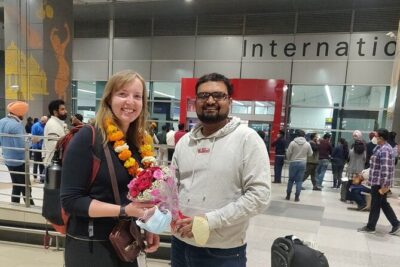
Your first day is built to reduce jetlag stress. You get a traditional welcome at New Delhi International airport, then transfer by air-conditioned vehicle to your hotel. After check-in, the rest of the day is free.
This is the smart way to start a Golden Triangle style trip: you land, you check in, you eat something familiar-ish if you want, and you save your energy for Old Delhi and Jaipur later. If you want to use the free time well, do something simple nearby, like a relaxed dinner and an early sleep.
Day 2: Old Delhi, Chandni Chowk rickshaw, Humayun’s Tomb, India Gate, Qutub Minar
Delhi day is where the trip shows its two sides: Mughal grandeur and street-level energy.
Red Fort area and Old Delhi market time
You spend time around Old Delhi, including Chandni Chowk (Moonlight Square). The market stop is paired with a rickshaw ride through the hustle, which is a practical choice. Walking is hard work here, because the lanes are narrow and crowded. The rickshaw gets you close without turning your day into a traffic puzzle.
A few more New Delhi days to compare
- Old & New Delhi City Tour – Half or Full Day Options Available
★ 5.0 · 4,811 reviews - Half Day Private Delhi City Tour
★ 5.0 · 4,474 reviews - Same Day Taj Mahal, Agra Fort & Baby Taj Tour from Delhi by Car
★ 5.0 · 4,304 reviews - Taj Mahal Day Tour from Delhi by Superfast Train – TOP RATED TOUR
★ 5.0 · 4,166 reviews
Humayun’s Tomb: Mughal architecture with breathing room
Humayun’s Tomb is a different tempo. It is listed as a garden tomb and is the first substantial example of Mughal architecture in India, built in 1565 by Bega Begam. The value of this stop is how it lets you reset your eyes after market chaos.
Rashtrapati Bhavan and India Gate photo-and-stroll zone
You also pass major government landmarks and India Gate, described as 42 meters high. It is less about climbing and more about orientation. If you have never visited Delhi, these sights help you understand the city’s layout and why parts of it feel so planned compared with Old Delhi.
Qutub Minar: fast, tall, and historically grounded
Qutub Minar is 73 meters high and built after the defeat of Delhi’s last Hindu kingdom. You are there for a couple of focused hours, and the ticket note says admission is not included. Still, it is a top Delhi must-see because it is one of the clearest vertical markers of early architecture history.
How to make this day work: wear comfortable shoes and be ready for strong street smells, noise, and heat. Delhi in one day can feel intense, but the itinerary spreads it across monuments and markets, so you get variety instead of repetition.
Day 3: checkout and drive to Jaipur
Day 3 is a travel day, and I like that it is not packed with extra sightseeing during the drive. You check out in the morning, drive to Jaipur, and check in at a pre-booked hotel.
This matters because Jaipur is a city you want to start fresh in. The road takes time, but you avoid stacking too many long museum hours right after Delhi.
Day 4 in Jaipur: Amer Fort jeep safari, Hawa Mahal, City Palace, Jantar Mantar
This is one of the most “value-heavy” days, because you get iconic Jaipur sights plus practical transport choices.
Amer Palace and the jeep safari climb
Amer Palace is your anchor stop. It is described as a blend of Hindu and Muslim architecture, built starting in 1592 under Raja Mansingh I. The itinerary includes a jeep safari to climb Amer Fort.
That jeep part is not just convenience. It also helps you keep the day from draining into uphill walking. You can spend more time looking at details, instead of battling the ascent.
Jal Mahal: quick, pretty, and easy
Jal Mahal, the Water Palace, is often a “blink and you miss it” stop. Here, the time given is short, and that is realistic. The point is to see it sitting in water and understand why it is so visually striking even when you are not doing a full long visit.
Hawa Mahal: fast exterior moment with big impact
Hawa Mahal, the Palace of Wind, is a five-story landmark built in 1799. You get a short time window, which is fine because you are mostly there for the facade and its famous look.
City Palace: architecture and courtyards
City Palace is described as a complex with courtyards, gardens, and buildings at the center of Old City. You spend about two hours. This is the stop where the city feels like a living museum, and not just a photo parade.
Jantar Mantar: astronomy in stone
Jantar Mantar, with its architectural astronomical instruments, includes the world’s largest stone sundial and is completed in 1734. It is listed with UNESCO mention. This stop is the payoff for travelers who like science, not only palaces.
Smart day strategy: plan on warm midday conditions. The itinerary is active, so drink water and pace yourself. If you want photos, do them early or later in the day when light softens.
Day 5: Agra arrival, Taj Mahal and Agra Fort
Agra is built for one main reason: the Taj Mahal. Everything else supports it.
Agra travel and hotel check-in
You leave Jaipur after breakfast, drive to Agra, check in, then head to sightseeing. That sequencing keeps you from arriving and rushing straight into long waits.
Taj Mahal: why this stop is worth structuring your trip around
The Taj Mahal is described as a symbol of love, built by Mughal Emperor Shah Jahan as a memorial for Mumtaz Mahal. The itinerary notes Taj Mahal is closed every Friday, which is important for planning.
Also included is a battery van ride at Taj Mahal in Agra. That may sound minor, but at the Taj complex, it reduces the walking grind and helps you stay focused on the main sights.
Agra Fort: Akbar’s power view
Agra Fort is built by Emperor Akbar on the Yamuna’s west bank. You spend about two hours and can expect a fort layout that is both dramatic and practical for imagining the old city’s defensive mindset.
Budget note: Taj Mahal and Agra Fort entrance fees are not included, and camera fees may apply. Build that into your money plan so you are not stuck at the gate.
Day 6: train to Jhansi, then onward to Khajuraho via Orchha
Day 6 is where the trip uses train travel to keep momentum.
You head to Agra railway station to board a train toward Jhansi, then transfer to Khajuraho. The itinerary includes train ticket for Agra to Jhansi in an air-conditioned coach, plus a stop en route at Orchha Fort.
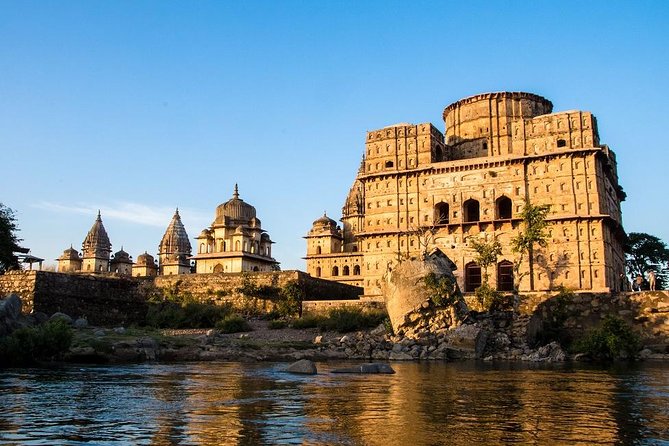
Orchha Fort is included with no listed admission requirement in the details, and it is a nice reset between Agra and the more distant, temple-focused world of Khajuraho. Orchha is also helpful because it changes your visual frame from Mughal marble to a different style of fort scenery.
Why this matters: using the rail leg cuts down on road time and helps you cover more geography without feeling like you are on a bus for 10 straight hours.
Day 7 in Khajuraho: Western and Eastern Group temples
Khajuraho is the tour’s artistic curveball. This is where you go from palace politics and city monuments into temple sculpture and carvings.
Western Group of temples
You explore the Western Group of Khajuraho, which includes 14 temples such as Matangesvara, Chaunsath Yogini, Kandariya Mahadeo, and Varaha. The itinerary includes about two hours.
Kandariya Mahadeo is often the biggest “wow” draw, but even beyond the famous temples, the real value is walking through multiple structures so you can compare styles and levels of detail.
Eastern Group temples
You also cover the Eastern Group, seven temples total, with three Hindu temples and four Jain temples. The included names include Vamana, Javari, and Parsvanatha. This helps you see that Khajuraho is not just one tradition, it is a cluster of beliefs expressed in stone.
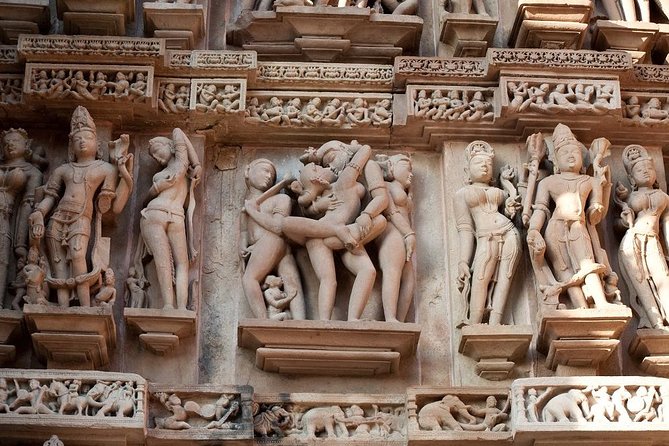
How to enjoy Khajuraho: take your time with the carvings. Even if you do not know every symbol, you can still appreciate the sheer craftsmanship and the way the temple shapes guide your view upward.
Day 8: Varanasi arrival, Sarnath, Kashi Vishwanath, ghats, and two extra spiritual stops
Varanasi is intense in a way that is hard to describe until you are there. The good part: this itinerary does not throw you into the deep end all at once. It builds a day around spiritual landmarks, starting with Sarnath and then moving to riverfront sights.
Transfer in, then breakfast and Sarnath excursion
You meet a representative at Varanasi railway station, then transfer to your hotel. After breakfast, you go to Sarnath, a quiet, spiritual place tied to Buddhism.
Sarnath is described as one of the four holiest places to Buddhists. It is known for stupas and historical sites. The time here is about two and a half hours.
Kashi Vishwanath Temple
Next comes Kashi Vishwanath Temple, dedicated to Lord Shiva and listed as one of the 12 Jyotirlingas. It sits on the western bank of the Ganga. This stop is short, about 30 minutes, but it is one of the emotional anchors of the city for many visitors.
Banaras Ghats
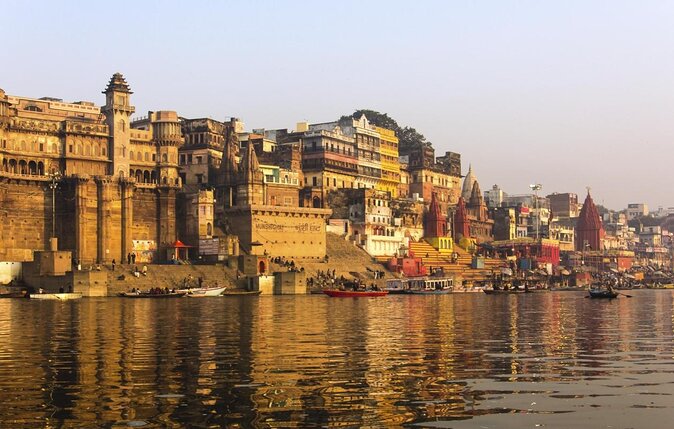
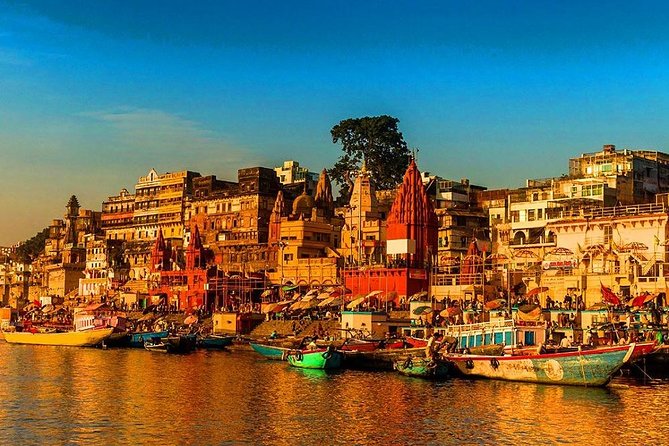
Then you head to the ghats, the long chain of river steps where pilgrims bathe for purification. The itinerary mentions about 100 ghats, each marked by a lingam. Expect a mix of ritual, daily life, and photography moments.
Bharat Mata Temple and Alamgir Mosque
You round out the day with Bharat Mata Temple and Alamgir Mosque. Bharat Mata Mandir is described as a shrine to Mother India with a relief map carved in marble, and Alamgir Mosque is a 17th-century structure associated with Mughal Emperor Aurangzeb.
These two stops are valuable because they show the layering of religion and identity in Varanasi, not only one single narrative.
Practical tip for the day: wear breathable clothes, keep water handy, and accept that Varanasi can be sensory overload. The itinerary gives you multiple short segments, so you are not stuck in one place for hours without a reset.
Day 9: sunrise Ganges boat ride and the flight home
This is the day that sells the whole itinerary, if you like spiritual morning energy.
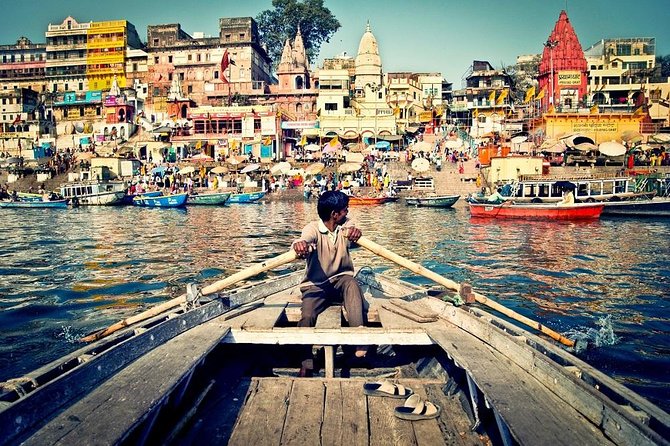
You start early for a boat ride on the Ganges, before dawn. The plan has you step into the boat as the boatman rows, then you watch the sunrise unfold. You are in the boat about an hour.
After the boat ride, you return to the hotel for breakfast, then get transferred to Varanasi airport for your onward flight.
Why this ending works: after days of forts, temples, and cities, the boat ride ties it all together with a living river. It also lets you end with a calm moment, instead of rushing through one last monument.
Included rides and factory visits: what they add to your day
This tour includes a bunch of “extras” that can either be a great shortcut or a time-killer, depending on your interests. Here is what you can expect.
Factory visits in Agra and Jaipur
There is a marble factory visit in Agra and handmade jewels or stone cutting factory visit in Jaipur. These stops can help you understand how certain crafts and materials connect to what you see, like stonework and design.
Shopping tours
You also have exclusive shopping tours in local markets for real Indian art and culture. This is a good fit if you like buying gifts that feel tied to the place, not just souvenirs from a mall.
My advice: keep an eye on timing. If a factory stop runs longer than you expect, it can cut into monument time. If you are not into shopping, still treat these stops as learning breaks, not chores, and decide in the moment how much time you want to spend.
Should you book this 9-day private Golden Triangle plus Khajuraho and Varanasi?
Book it if you want one guided plan that hits Delhi, Jaipur, Agra, Khajuraho, and Varanasi without you piecing together trains and drivers. I also think it is a great match if you like structured days but still want authentic moments, like the Chandni Chowk rickshaw ride and the Ganges sunrise.
Skip it or ask questions first if:
- You are traveling on a Friday and Taj Mahal timing matters to you.
- You do not want to budget for entrance fees and possible camera fees.
- You prefer fewer moving parts and more downtime each day.
Overall, this is strong value for a private-style itinerary that uses AC trains to connect distant stops, then fills the time with guided sights plus a couple of cleverly chosen transport and experience upgrades.
Recently added around New Delhi
- Private Same day Jaipur Tour from New Delhi★ 5.0 · 82 reviews
- Private Agra Day Tour★ 5.0 · 14 reviews
- Taj Mahal,Agra fort and Baby Taj tour from Delhi by Express train★ 5.0 · 7 reviews
- From Delhi: Full Day TajMahal & Agra Fort with 5 Star Lunch★ 5.0 · 64 reviews
- Taj Mahal & Agra City Private Tour from Delhi by Car – Fast Entry★ 5.0 · 13 reviews
- All Inclusive: Same day Taj Mahal Tour From Delhi★ 5.0 · 111 reviews
- Same Day Tour of Taj Mahal with Our Real Historical Experience★ 5.0 · 42 reviews
- Same Day Agra/Taj Mahal Tour from Delhi : Private & all inclusive★ 5.0 · 38 reviews
Golden Triangle Tours, compared.

3-Days Private Golden Triangle Tour: Delhi, Agra & Jaipur by Car
Read our review →3-Days Private Golden Triangle Tour: Delhi, Agra & Jaipur by Car
Read our review →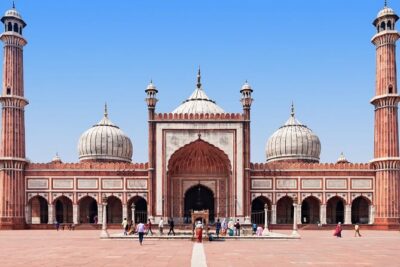
3-Day Delhi, Agra and Jaipur Private Tour – India Golden Triangle
Read our review →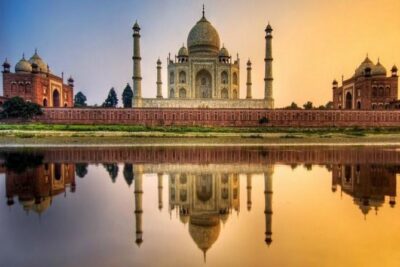
Four-Day Private Luxury Golden Triangle Tour to Agra and Jaipur From New Delhi
Read our review →
5 Nights 6 Days Private Golden Triangle Tour – Delhi Agra Jaipur
Read our review →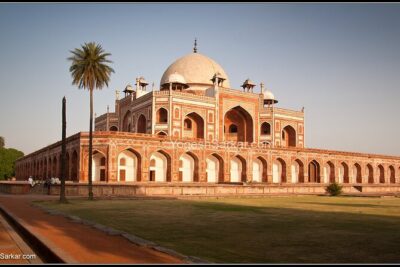
Private Car and Drive for Golden Triangle (4N/5D)
Read our review →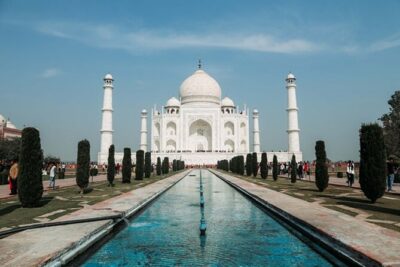
Private Golden Triangle Tour Delhi Agra Jaipur ( Top Rated )
Read our review →Browse the lists this tour appears in