
Reviewed · GOLDEN TRIANGLE TOURS
5 Days Golden Triangle Tour. Delhi-Agra-Jaipur-Delhi
Five days in India, built for first-timers. I like how this trip uses an air-conditioned private car to keep travel sane, and I like that it plans the sunrise Taj Mahal for the best light and calmer grounds. You get a guided route through Delhi, Agra, and Jaipur without the usual guessing game.
The big thing to watch is cost creep: monument entry tickets are not included for several major stops, so you’ll want a little extra budget ready in addition to the tour price.
In This Review
- Quick hits that matter
- How this 5-day route keeps your days organized
- Jama Masjid, Chandni Chowk, Raj Ghat, Lotus Temple: Day 1 in Old Delhi style
- Humayun’s Tomb and Qutub Minar: UNESCO-level stops, plus a ticket detail
- Birla Mandir at dusk: a gentle evening option on Day 2
- Amber Palace, City Palace, Jantar Mantar: Jaipur’s big three on Day 3
- Jaipur picture stop strategy, plus how to avoid “only photos” regret
- Chand Baori stepwell and Agra Fort: Day 4’s standout mix
- Sunrise Taj Mahal on Day 5: making the most of the 2-hour visit
- Hotel, pickup, and A/C car comfort across the triangle
- Why the guide makes this tour feel personal, Vishal and Prashant included
- Budget reality check: what’s included, what you’ll pay separately
- Who should book this Golden Triangle loop (and who may want more time)
- Should you book the 5 days Golden Triangle Delhi, Agra, Jaipur, back to Delhi?
- FAQ
- What cities are included in the 5-day Golden Triangle tour?
- Does the tour include pickup?
- Is there a guide during the sightseeing?
- Is transportation included, and what is it like?
- Are hotel stays included?
- Are monument entry tickets included?
- When is the Taj Mahal visit planned?
- Is free cancellation available?
Quick hits that matter
- Small, private feel: only your group participates, with city guide support and private transportation.
- Old Delhi plus modern worship spaces in one day: Jama Masjid, Chandni Chowk, Raj Ghat, and Lotus Temple are all on Day 1.
- Photo-friendly pacing: Jal Mahal is mainly a drive-past with a short picture stop, so you do not lose the whole day to one site.
- Jaipur logic: Amber Palace, City Palace, and Jantar Mantar connect well as a mix of fort, royal residence, and astronomy tools.
- Day 5 is built for timing: the Taj Mahal stop is designed around early light, with a 2-hour visit window.
How this 5-day route keeps your days organized
The Golden Triangle works best when you treat it like a sprint with breaks, not a checklist marathon. This tour is built around that idea: a private A/C car handles the movement between Delhi, Agra, and Jaipur, while a city guide keeps the day flowing and helps you avoid dead time.
You’re not only chasing monuments either. Day 1 balances big religious landmarks (Jama Masjid, Lotus Temple), a key memorial (Raj Ghat), and a major Mughal-era tomb (Humayun’s Tomb). Then Day 3 and Day 4 shift gears into Jaipur’s Rajput architecture and Agra’s fort and stepwell scenery.
If you like flexibility, you’ll also appreciate that the tour is described as customizable, with the experience adjustable to longer or shorter stays within a wider range. That matters because North India travel is real travel, with traffic and heat, and you want room to breathe.
Golden Triangle tours readers book most in New Delhi:
- 3-Days Private Golden Triangle Tour: Delhi, Agra & Jaipur by Car
★ 5.0 · 1,107 reviews - 3-Days Private Golden Triangle Tour: Delhi, Agra & Jaipur by Car
★ 5.0 · 1,098 reviews - 3-Day Delhi, Agra and Jaipur Private Tour – India Golden Triangle
★ 5.0 · 812 reviews
Jama Masjid, Chandni Chowk, Raj Ghat, Lotus Temple: Day 1 in Old Delhi style
Day 1 is your orientation day, and it’s intentionally dramatic. You start at Jama Masjid, described as the largest mosque in India, with a courtyard that can accommodate more than 25,000 persons. Even if you have zero interest in architecture, the scale hits you fast. This is one of those places where your brain instantly realizes you are seeing a living space, not just a postcard.
Next comes Chandni Chowk. Instead of walking the whole stretch, you get a rickshaw ride for about 30 minutes, and the market visit is framed around getting a feel for one of Old Delhi’s oldest and busiest shopping areas. The tour also flags a key detail: Chandni Chowk was built in the 17th century by Shah Jahan, who later connects to the Taj story. It’s a neat way to connect the cities without needing a lecture.
Then you pivot to Raj Ghat, Mahatma Gandhi’s resting place. It’s a shorter stop, but it changes the mood in a useful way. You’re not just looking up at monuments, you’re also thinking about the people who shaped modern India.
Finally, you finish at Lotus Temple, open to all regardless of religion. It’s the kind of stop that helps you reset after Old Delhi’s visuals and crowds. Even with a quick visit window (45 minutes), the building’s geometry and calm atmosphere give you a breather before the next day’s shift.
Possible drawback for Day 1: it’s packed. If you want more time to linger in any single place, you may need to pace yourself and use your guide’s help to keep transitions smooth.
Humayun’s Tomb and Qutub Minar: UNESCO-level stops, plus a ticket detail
On Day 1, you also get Humayun’s Tomb, the tomb of the second Mughal emperor, and described as the first garden-tomb on the Indian subcontinent. It’s also listed as a UNESCO heritage site in the tour description. This is a very good stop for your camera and your imagination, because garden-tombs create a different kind of atmosphere than forts or city palaces.
After that, Qutub Minar enters the picture. The tour notes it as the tallest brick minaret in the world. That kind of superlative does not matter as much as the experience itself, but it does help you understand why people come. You get that vertical, landmark effect right in the middle of your day.
Here’s the practical part: admission tickets for Humayun’s Tomb and Qutub Minar are not included. So you should plan to pay separately if you want the full experience at both sites. If you’re budget-sensitive, consider deciding in advance which one you most want to prioritize, then use your guide to manage time.
This is also the day where you’ll notice the tour’s mix of included and not-included items. Some stops are free, like Jama Masjid and Lotus Temple (both listed as free entry in the schedule), while other major monuments require an extra payment. That mix is common in India, but it’s still worth planning for.
Birla Mandir at dusk: a gentle evening option on Day 2
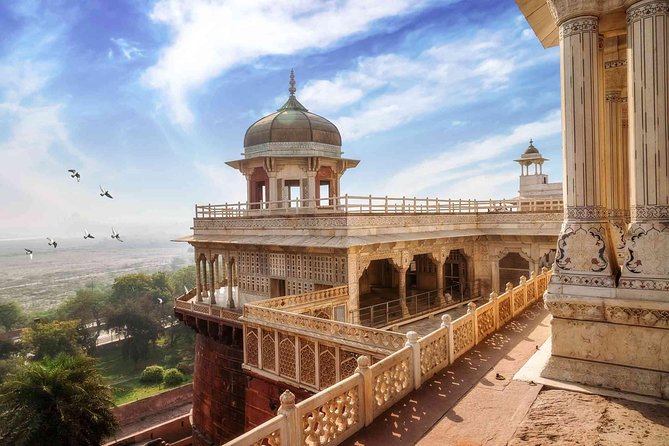
Day 2 is lighter on the number of stops. In the evening, you visit Birla Mandir, and the tour mentions an evening ceremony. The temple is dedicated to Lord Vishnu (Narayan) and his consort Lakshmi (Goddess of wealth).
This is a smart way to break the intensity of Day 1 and keep your energy for the next two days. A 45-minute visit is short, but it’s long enough to walk the space, get a sense of the setting, and catch the atmosphere of the ceremony if it lines up with the timing.
The tour lists admission as free here, which also helps with budgeting. If you prefer your days with more breathing room, Day 2’s structure is one reason this itinerary works. It gives you a more balanced rhythm instead of three nonstop monument days in a row.
A few more New Delhi days to compare
- Old & New Delhi City Tour – Half or Full Day Options Available
★ 5.0 · 4,811 reviews - Half Day Private Delhi City Tour
★ 5.0 · 4,474 reviews - Same Day Taj Mahal, Agra Fort & Baby Taj Tour from Delhi by Car
★ 5.0 · 4,304 reviews - Taj Mahal Day Tour from Delhi by Superfast Train – TOP RATED TOUR
★ 5.0 · 4,166 reviews
Amber Palace, City Palace, Jantar Mantar: Jaipur’s big three on Day 3
Day 3 is Jaipur in full color, starting with Amber Palace. The description calls it the principal tourist attraction in Jaipur, influenced by Mughal architecture and serving as the residence of the Rajput Maharajas and their families. That detail matters. You’re not only visiting a visual spectacle, you’re also stepping into a place designed for power and daily life.
Next comes Jal Mahal. The tour is clear that this is mainly a drive past, with an optional short stop for pictures for about 10 minutes. That’s a useful compromise if you want the iconic view without sacrificing half a day. It also helps keep the rest of Jaipur on track, especially when you have several major sites scheduled.
Then you move into City Palace of Jaipur, founded when Jaipur was established, by Maharaja Sawai Jai Singh II. The schedule notes the palace complex includes several buildings, courtyards, and galleries. Even with a one-hour window, the layout is a reminder that royal residences in Jaipur are not one single building. It’s a structured complex, and your time goes faster than you might expect if you wander.
You wrap the day with Jantar Mantar, described as an equinoctial sundial. The details in the description, like the gigantic triangular gnomon and how the quadrants connect to Earth’s axis, hint at why this place is not just pretty. It’s built to measure time and celestial angles, in stone.
Ticket note: Amber Palace, City Palace, and Jantar Mantar are listed as not included for admission. So treat Day 3 as your day for extra entry fees. If you like to plan, decide early that you’re going in for the full sites, not just photo stops.
Jaipur picture stop strategy, plus how to avoid “only photos” regret
The itinerary also includes a picture stop of about 10 minutes on Day 3. That might sound minor, but it’s part of the way this route protects your overall time. Golden Triangle tours often pack too much, so a quick photo stop can be a lifesaver if your guide uses it well.
Still, you should be honest with yourself about what you want most in Jaipur. If your priority is interiors and exhibits, you’ll likely want to spend your time at Amber Palace and City Palace rather than treating every scenic spot as a stop-and-snap. If your priority is views, Jal Mahal and the photo stop can satisfy that goal without taking you away from the main sites.
The best approach is simple. Tell your guide what you care about most, and let the schedule help you, not fight you. The tour format is built for exactly that: a guide-run itinerary that can bend to what you want in each city.
Chand Baori stepwell and Agra Fort: Day 4’s standout mix
Day 4 shifts the feel from royal Jaipur to quieter, deeper Agra scenery. The day begins with Chand Baori in Abhaneri, a stepwell described as having about 3,500 narrow steps over 13 stories. That scale is the point. It’s not just a photo location, it’s a geometry lesson you can walk into. With a 30-minute stop, you get enough time to descend a bit, look around, and understand why this kind of water structure becomes a local landmark.
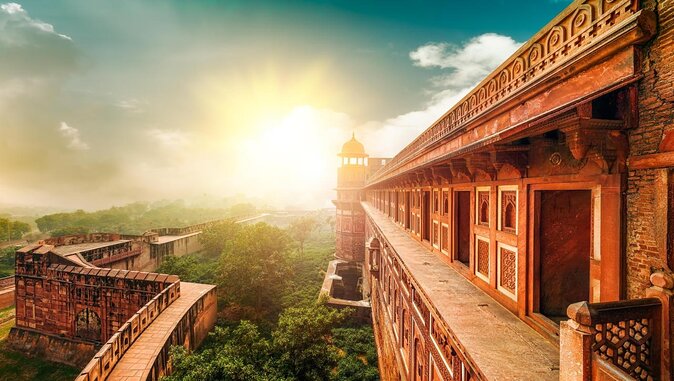
Then you head to Agra Fort, built during 1565 to 1573 for Mughal Emperor Akbar. The tour also notes it is UNESCO World Heritage Site. Forts are useful on a Golden Triangle itinerary because they help you see how power was defended and organized. Even if you only have 1 hour 30 minutes, the setting gives you context for what you’re about to see on Day 5 at the Taj.
Ticket note again: Chand Baori and Agra Fort are listed as not included for admission. So Day 4 is another day where extra fees are likely. If you’re trying to control spending, it’s smart to keep your Taj budget separate, then pay the other monuments as you go.
Sunrise Taj Mahal on Day 5: making the most of the 2-hour visit
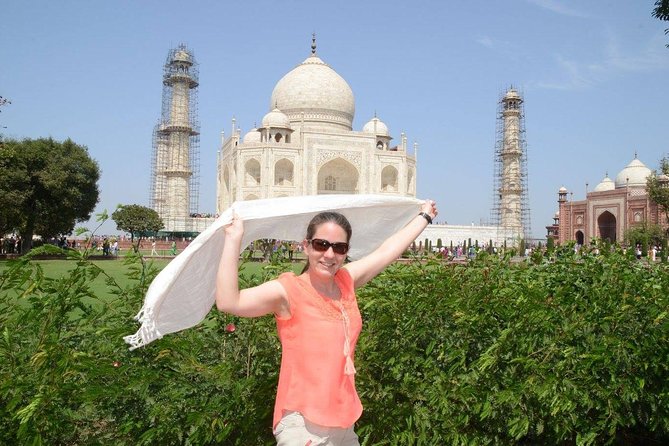
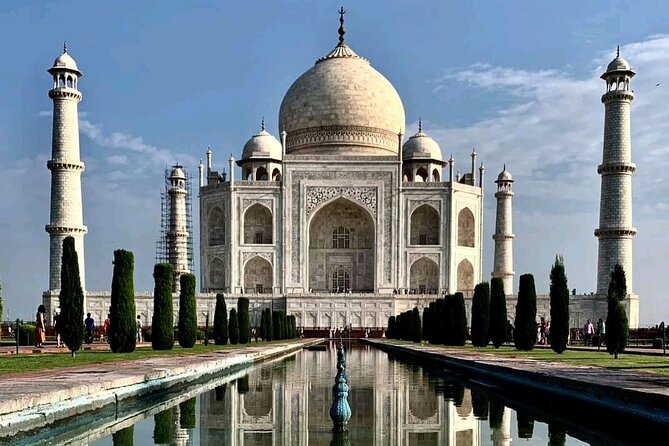
The Taj Mahal is the star, and this itinerary schedules it as an early-morning experience. The tour notes that sunrise is the best time to visit, with softer golden light on the dome and fewer crowds at that time. It also gives you a 2-hour visit window, which is a realistic amount of time to see the key areas without feeling trapped.
What I like about the way the tour frames this day is that it focuses on timing rather than pressure. A 2-hour window means you can handle photos, watch the changing light, and still have time to absorb the building’s details. You also get a clearer sense of why the Taj is famous for symmetry and marble work, because morning light makes those surfaces easier to read.
Admission note: the Taj Mahal stop is listed as not included for the ticket. So budget extra. If you want to avoid last-minute stress, treat your Taj ticket as a separate commitment you handle early, even if your guide manages the day.
One more detail worth knowing: this day is simple on the plan because the Taj deserves it. When the itinerary is right, you do not waste hours switching between unrelated stops. You focus on the one moment that makes the entire Golden Triangle worth the effort.
Hotel, pickup, and A/C car comfort across the triangle
The tour includes a comfortable air-conditioned private car and pickup is offered. It also includes packaged drinking water, which is a small thing that matters more than people think once you are moving between sites in North India.
Accommodation is described as three-star hotels with breakfast. That’s a practical match for a fast itinerary like this. You want decent basics, clean rooms, and a morning meal that does not require hunting around. Breakfast also helps you handle early starts, especially on the day you go for the Taj at sunrise.
You’re not just paying for transportation either. The guide role and city planning are what turn movement into a day. Someone is managing the order of stops, keeping you on schedule, and helping you navigate between areas.
If you get motion sick or you simply want less fatigue, private A/C transport is a real value add on a route like this. It’s one of the reasons the itinerary feels manageable even when the sights are big.
Why the guide makes this tour feel personal, Vishal and Prashant included
The best praise in the reviews centers on the guides, and you can feel what that means for your actual experience. One guide named Vishal is credited with being amazing, considerate of what people want to see, and even going above and beyond regarding health. That last part matters because it’s easy to say yes to a schedule, harder to adapt when someone needs breaks.
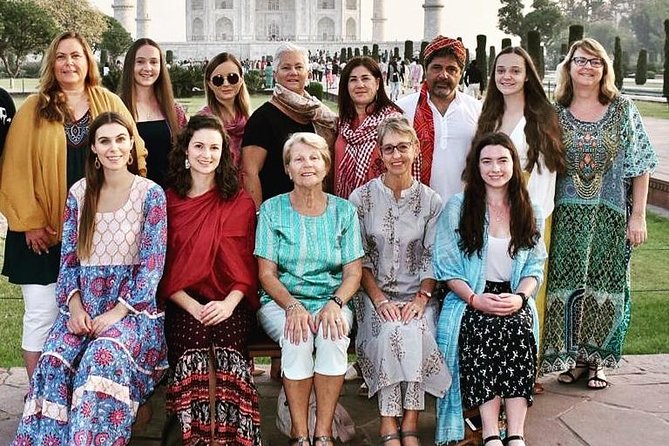
Another set of highlights credit Prashant and Prashant Upadhyay for being professional, going out of his way, and handling admin and logistics so the day feels simple. In particular, one group mentions Prashant organizing a photo shoot at the Taj Mahal, which goes beyond basic guiding and shows how flexible the support can be.
There’s also mention of translation help, plus a bus driver who handled chaotic traffic with ease and even assisted with crossing the road when needed. You don’t need dramatic help every minute, but in India, good traffic skills reduce stress fast.
Bottom line: if you care about more than just monuments, choose this kind of guided private setup. When the guide is good, your sightseeing becomes smoother, and your stops feel more intentional.
Budget reality check: what’s included, what you’ll pay separately
The price listed is $300 per person. Whether it’s a great deal depends on what you value. You’re getting a guided, multi-city route with a private A/C vehicle, city guide support, packaged drinking water, and all fees and taxes are listed as included.
But monument admission is not included for many key sights. In the itinerary, multiple stops are explicitly marked as not included, including:
- Humayun’s Tomb
- Qutub Minar
- Amber Palace
- City Palace of Jaipur
- Jantar Mantar
- Chand Baori
- Agra Fort
- Taj Mahal
Some stops are listed as free, like Jama Masjid, Raj Ghat, and Lotus Temple. Chandni Chowk’s rickshaw ride is included as well. Birla Mandir is listed as free entry.
So the smart budgeting move is this: treat the tour fee as paying for transportation, guide, and organization, then add a separate monument budget for the not-included sites. That way, you won’t be surprised when you reach the bigger ticket attractions.
Who should book this Golden Triangle loop (and who may want more time)
This tour fits you if you:
- Want culture and architecture in three cities without spending days figuring out logistics.
- Like a structured route, but still want a private format where your guide can adjust pacing.
- Are okay paying extra for some monument entry tickets to get the most famous sights handled efficiently.
It may not fit you as well if you:
- Want lots of deep, slow time inside every palace and museum. Many key stops have limited visit windows.
- Prefer a trip where all major admission fees are bundled into the price. This one clearly splits included items and not-included monument tickets.
The good news is the tour is described as customizable, so if you want a calmer pace, ask about extending beyond five days. That extra time can turn a rushed feeling into a comfortable one.
Should you book the 5 days Golden Triangle Delhi, Agra, Jaipur, back to Delhi?
If you want a practical first trip through North India’s headline sites, this is a strong candidate. The A/C private car, hotel with breakfast described in the trip details, and guide support make it easier to handle distance, traffic, and early timing.
I’d book it if you’re comfortable budgeting separately for monument entry tickets, and you like the idea of starting Old Delhi, then moving through royal Jaipur, ending with the sunrise Taj Mahal.
Before you pay, do two things. Confirm how the hotel and breakfast work for your departure, and map your must-see monuments so you know which ones are likely ticket extras. If you do that, this itinerary delivers exactly what the Golden Triangle should: big sights, sensible pacing, and a guide who helps you enjoy the ride, not just survive it.
FAQ
What cities are included in the 5-day Golden Triangle tour?
The tour covers Delhi, Agra, and Jaipur, with return to Delhi.
Does the tour include pickup?
Pickup is offered.
Is there a guide during the sightseeing?
Yes. A city tour guide is included.
Is transportation included, and what is it like?
You travel by a comfortable air-conditioned private car, with private transportation included.
Are hotel stays included?
The tour description says it includes accommodation in three-star hotels, with breakfast.
Are monument entry tickets included?
No. Monument tickets are not included for several major stops, while some other stops are listed as free.
When is the Taj Mahal visit planned?
The tour describes an early-morning Taj Mahal visit, highlighting sunrise as the best time and noting it can mean softer light and fewer crowds.
Is free cancellation available?
Yes. Free cancellation is offered up to 24 hours in advance for a full refund, and the tour requires good weather, with alternative dates or a full refund if canceled due to poor weather.
Recently added around New Delhi
- Delhi Agra Jaipur Udaipur Rajasthan 9 Days Tour From New Delhi★ 4.5 · 7 reviews
- Private Golden Triangle Tour with Udaipur From Delhi★ 5.0 · 6 reviews
- Golden Triangle Tour With Ranthambore (Viator Award Winner)★ 5.0 · 9 reviews
- From New Delhi : 5 Days Golden Triangle Tour★ 5.0 · 22 reviews
- Golden Triangle Tour With Ranthambore Tiger Safari★ 5.0 · 22 reviews
- Golden Triangle Tour Package Delhi Agra Jaipur★ 5.0 · 68 reviews
- Four Days New Delhi Golden Triangle Tour★ 5.0 · 13 reviews
- Golden Triangle Tour By Car ( 6 Days )★ 5.0 · 7 reviews
Golden Triangle Tours, compared.

3-Days Private Golden Triangle Tour: Delhi, Agra & Jaipur by Car
Read our review →3-Days Private Golden Triangle Tour: Delhi, Agra & Jaipur by Car
Read our review →
3-Day Delhi, Agra and Jaipur Private Tour – India Golden Triangle
Read our review →
Four-Day Private Luxury Golden Triangle Tour to Agra and Jaipur From New Delhi
Read our review →
5 Nights 6 Days Private Golden Triangle Tour – Delhi Agra Jaipur
Read our review →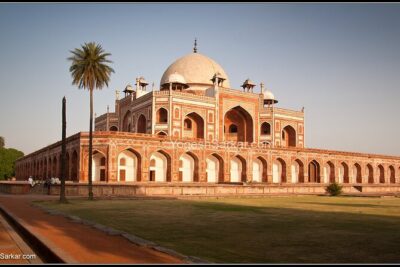

Private Car and Drive for Golden Triangle (4N/5D)
Read our review →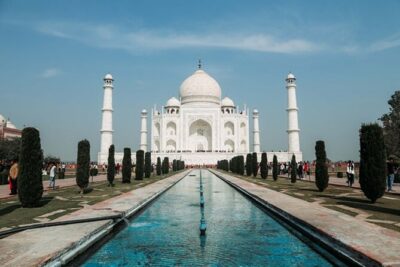
Private Golden Triangle Tour Delhi Agra Jaipur ( Top Rated )
Read our review →Browse the lists this tour appears in