

Reviewed · GOLDEN TRIANGLE TOURS
5 Day Private Luxury Golden Triangle Tour to Delhi Agra Jaipur
Delhi to Jaipur in five days, no guesswork. This private luxury Golden Triangle route is a smart way to hit India’s headline monuments with an AC car and an English-speaking driver-guide handling the handoffs. I like the included pickup and drop-off, and I like that the plan builds in practical comforts like the Taj Mahal battery-bus ride so you do not spend energy just getting to the main site.
One caution: the itinerary is packed, and lunch and dinner are not included, so you will want to keep some flex in your day for food stops. Also, your hotel rooms are typically set up on double or twin sharing, so if your group has 3 people, room arrangements can matter.
If you are lucky enough to get a driver like Sultan Singh, the trip can feel very smooth, with that punctual, helpful vibe. And if you need schedule adjustments, a coordinator named Javed has been noted for quick communication via WhatsApp during similar planning.
In This Review
- Key highlights worth knowing
- The Golden Triangle, built around comfort and timing
- Price and value: what $194 buys in real-life terms
- Delhi in one day: how the stops fit together
- Airport or hotel meet-and-greet, then a city tour
- India Gate and Humayun’s Tomb
- Lotus Temple and Qutub Minar: spiritual contrasts and UNESCO scale
- Raj Ghat and Jama Masjid: the day turns reflective
- The practical reality of Delhi
- Agra on Day 2: Taj Mahal access made easier
- Travel to Agra after breakfast
- Taj Mahal: time on site matters
- Agra Fort for context beyond the postcard
- Fatehpur Sikri en route to Jaipur: a powerful stop with a long shadow
- The drive and the historical payoff
- Arrival in Jaipur and hotel night
- Jaipur Day 4: forts, city power, and the observatory crowd-pleaser
- Amber Fort and the classic fort-palace view
- Jal Mahal: the quick pause with a photo line
- City Palace: where power becomes museum space
- Jantar Mantar: the observatory that still feels modern
- Hawa Mahal and Albert Hall: iconic exteriors and museum breaks
- Day 5: the easy exit, if you plan your flight time
- What makes the service feel “private luxury” in practice
- The vehicle plan scales with your group
- English support at monument level
- Bottled water and small daily comforts
- Small drawbacks to plan around
- Who should book this Golden Triangle tour
- Smart tips before you go
- Should you book this 5-day private luxury Golden Triangle tour?
- FAQ
- Is pickup included for this tour?
- What cities are included in the Golden Triangle route?
- Are meals included besides breakfast?
- What kind of transportation do I get?
- Are entrance fees included?
- How is access to the Taj Mahal handled?
- What language support do guides provide?
- What hotels are included?
- What is the cancellation deadline for a full refund?
- When does the tour operate?
Key highlights worth knowing
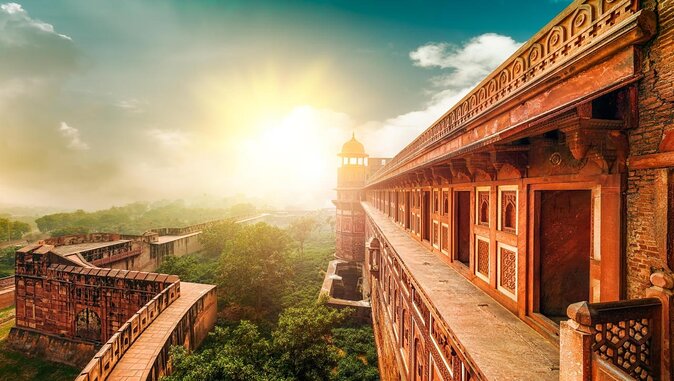
- Private AC transport sized to your group (sedan, MUV, or van), with driver and all tolls, parking, and fuel handled
- Meet-and-greet with a placard at the airport or pickup point, plus hotel or station transfers
- Guided monument explanations in English, including history at each stop so details actually stick
- Taj Mahal logistics included, including the battery-bus ride between parking and the monument area
- Breakfast included in the hotels (4 breakfasts), with bottled water supplied daily
- A classic Golden Triangle mix: Delhi’s Mughal highlights, Agra’s monuments, and Jaipur’s forts and observatories
The Golden Triangle, built around comfort and timing
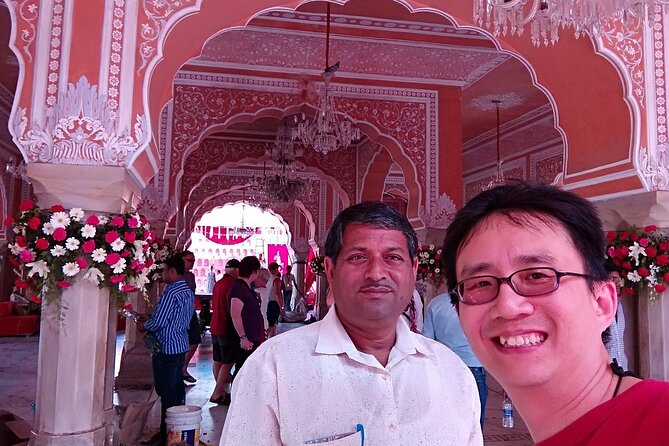
The Golden Triangle route is popular for a reason. In a single loop you get Delhi’s layers, Agra’s Mughal icons, and Jaipur’s Rajput shapes and colors. What makes this version of the tour feel more “luxury” than the usual whirlwind is the way logistics are bundled: you do not have to coordinate transport between cities or figure out who is doing what at each monument.
The core setup is straightforward. You travel in a private, air-conditioned vehicle with a professional English-speaking driver, and you also get an English-speaking guide for Delhi, Agra, and Jaipur. That pairing matters because these monuments come with a lot of context, and the guide time helps you connect the visual details to the bigger story.
The biggest practical win is that you start each day with a plan, not a scramble. The route also includes flexibility to begin sightseeing at a time that works for you, which can be useful if you are managing jet lag or want to pace crowds differently.
Golden Triangle tours readers book most in New Delhi:
- 3-Days Private Golden Triangle Tour: Delhi, Agra & Jaipur by Car
★ 5.0 · 1,107 reviews - 3-Days Private Golden Triangle Tour: Delhi, Agra & Jaipur by Car
★ 5.0 · 1,098 reviews - 3-Day Delhi, Agra and Jaipur Private Tour – India Golden Triangle
★ 5.0 · 812 reviews
Price and value: what $194 buys in real-life terms
A price that low for a 5-day private luxury tour is the first thing you should sanity-check. Here is the good news: the tour description ties a lot of costs to the package, which is where value can show up.
Based on what is included, you are paying for:
- Private car with driver, sized to your group
- All tolls, parking, fuel, taxes, and state charges
- English-speaking guides in each city
- Hotel breakfast (4 breakfasts)
- Bottled water, 2 x 500 ml per person per day
- Entrance fees as per the listed stops, plus battery-bus transfers for the Taj Mahal area
- Mobile ticket and private logistics
What is not included: lunch and dinner plus optional gratuities. That gap is normal, but it changes how “luxury” feels day-to-day, because your mid-day and evening budget becomes part of the trip.
My take on value: this tour can feel like a strong deal if you like structure and want the major monuments covered without bargaining your way through transportation. It is also a better value when more people share the vehicle cost. If you travel solo, or you are the type who likes long unplanned stops and slow wandering, you might feel the cost pressure more because meals are extra.
Delhi in one day: how the stops fit together
Day 1 is essentially Delhi in two modes. You start with a broad city tour, then you move into Old Delhi’s Mughal-era power centers. The pacing can feel like a lot, but it also gives you a clear mental map by the end of the day.
Airport or hotel meet-and-greet, then a city tour
Your day starts with a meet-and-greet at the airport or pickup point, with the representative holding your name placard. That may sound like a small detail, but in Delhi, it removes one of the most stressful parts of arrival.
Then you transfer to your hotel, check in, and begin the sightseeing loop. The itinerary calls out stops like Birla Temple, India Gate, Humayun’s Tomb, Lotus Temple, and then Old Delhi monuments such as Red Fort, Jama Masjid, and Qutub Minar.
I like how the order works thematically. Even with a packed schedule, you see different architectural styles rather than repeating similar-looking sites back to back.
A few more New Delhi days to compare
- Old & New Delhi City Tour – Half or Full Day Options Available
★ 5.0 · 4,811 reviews - Half Day Private Delhi City Tour
★ 5.0 · 4,474 reviews - Same Day Taj Mahal, Agra Fort & Baby Taj Tour from Delhi by Car
★ 5.0 · 4,304 reviews - Taj Mahal Day Tour from Delhi by Superfast Train – TOP RATED TOUR
★ 5.0 · 4,166 reviews
India Gate and Humayun’s Tomb
India Gate is a war memorial, tied to British-era planning for soldiers who were killed. Even if you do not spend long there, it sets an official, reflective tone for the day.
Next comes Humayun’s Tomb, commissioned in 1558 by Humayun’s first wife and chief consort, Empress Bega Begum. This stop is a great example of why having a guide matters: you can look at the garden-and-tomb layout yourself, but with narration you understand why it was designed the way it was and how it influenced later Mughal architecture.
Lotus Temple and Qutub Minar: spiritual contrasts and UNESCO scale
Lotus Temple is a Bahá’í House of Worship, famous for its lotus-like shape, dedicated in December 1986. It is visually distinctive, and it breaks the day’s Mughal-heavy feel with a more modern, geometric spirituality.
Then you reach Qutub Minar, a UNESCO World Heritage Site built between 1199 and 1220. This is the kind of stop where a guide can help you look up instead of just snapping photos. When you know the structure’s timeline, it feels less like a random tower and more like a historical anchor.
Raj Ghat and Jama Masjid: the day turns reflective
Raj Ghat, the memorial dedicated to Mahatma Gandhi, is a short stop but meaningful. The tour also includes Jama Masjid, built by Shah Jahan between 1650 and 1656. Because Jama Masjid is one of the largest mosques in Delhi, it has scale that reads instantly, even if you only spend limited time.
The practical reality of Delhi
Delhi days can be long, and Day 1 is long. If you get easily tired by constant movement, plan a slower pace in the evening, and do not schedule anything extra for yourself after your return to the hotel.
Also, note that the itinerary mixes stops labeled admission free and admission included. That does not mean you have to carry cash all day, but it does mean you should trust the package for entrances that are listed as included and expect that some stops may be ticket-free.
Agra on Day 2: Taj Mahal access made easier
Day 2 shifts gears to Agra, with check-in at your hotel and then a city tour focused on the big three: the Taj Mahal, Agra Fort, and the surrounding context.
Travel to Agra after breakfast
After breakfast, you head from Delhi to Agra. Once you arrive, you check into your hotel first. That buffer helps. Many Golden Triangle tours skip this, and then you end up stressed in the middle of sightseeing.
Taj Mahal: time on site matters
The tour includes Taj Mahal as the headline stop, described as the symbol of love, commissioned in 1631 by Shah Jahan to house the tomb of Mumtaz Mahal, and also housing Shah Jahan’s tomb. That is the kind of statement that sounds familiar until you actually stand there and realize the place was designed to be emotional, not just impressive.
Two package details can make a real difference:
- Entrance fees for Taj Mahal are listed as included
- You get the battery bus ride to and from the Taj Mahal parking lot
That last item is practical. It saves you time and walking energy, especially helpful if you are traveling with mobility limitations or if the heat is intense.
I also suggest you build a little patience into the day. The Taj Mahal area draws crowds. A good guide helps you keep moving at the right pace so you still see the key views without rushing through everything.
Agra Fort for context beyond the postcard
Then you go to Agra Fort, a historical fort also known as Agra’s Red Fort. The itinerary notes Humayun’s coronation there and later renovation by Akbar. This stop is important because it gives you a sense of Agra as a power center, not just a single monument.
If you only saw the Taj and nothing else, you might miss how rulers lived and defended cities. Agra Fort fills that gap.
Fatehpur Sikri en route to Jaipur: a powerful stop with a long shadow
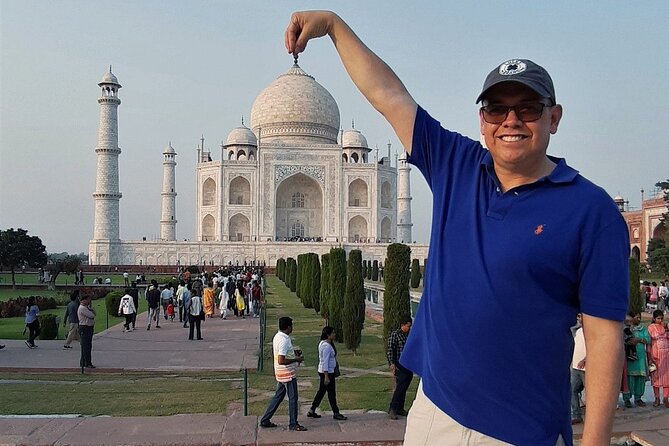
Day 3 starts with a transfer toward Jaipur and includes Fatehpur Sikri along the way. This is one of those stops that feels like it belongs to a different era of travel. The itinerary highlights the old Mughal capital under Akbar and specific features like Buland Darwaza and the shrine of Sheikh Salim Chishti.
The drive and the historical payoff
Fatehpur Sikri is described as Akbar’s old capital, and the tour calls out Buland Darwaza as the world’s largest entrance gate. Even if you take that as a marketing line, the point holds: it is meant to be a grand threshold.
The route also lists:
- Shrine of Sheikh Salim Chishti
- Panch Mahal, tied to Fatehpur Sikri’s palace complex
For me, the value of this day is that it breaks up the Golden Triangle loop. You are not only repeating Delhi, Agra, Jaipur. You’re adding a big Mughal chapter that connects to Akbar’s ambitions.
Arrival in Jaipur and hotel night
Once you reach Jaipur, you check in and overnight at your hotel. That matters because Jaipur is where the sightseeing gets long again. A rest night is a luxury, even if you think you will be fine without it.
Jaipur Day 4: forts, city power, and the observatory crowd-pleaser
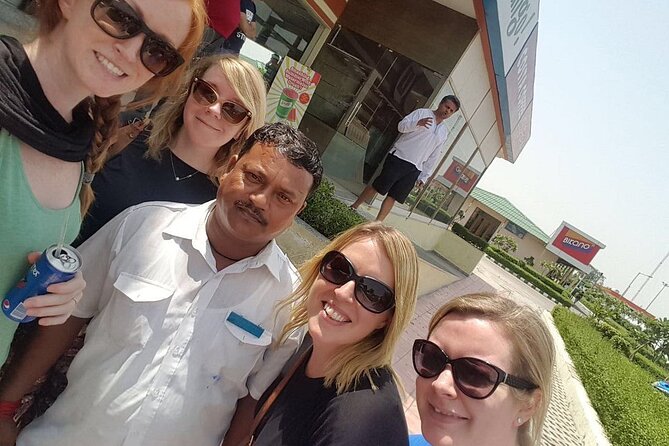
Day 4 is the longest sightseeing block in Jaipur, and it is packed in a way that makes sense. You start outside the city with Amber Fort, then you move into the old core with City Palace, observatories, and museum stops.
Amber Fort and the classic fort-palace view
The itinerary begins with an excursion to Amber Fort, a hilltop fort and palace complex. Construction is noted as started by Man Singh I in 1592. The description also mentions the fort’s “classic romantic Rajasthan” feel, and that tracks with how it reads in real life: it looks like a stage set.
Amber Fort is included with admission fees listed as included. In a day where you have many stops, this is a must-do. You get the fort experience and also the emotional payoff of Jaipur’s grandeur in one place.
Jal Mahal: the quick pause with a photo line
Next is Jal Mahal, the Water Palace in the middle of Man Sagar Lake. Admission is listed as free and the stop is short. This one is about the viewpoint and the surprise of seeing a palace-like silhouette over water, even if you do not spend much time there.
City Palace: where power becomes museum space
Then you visit City Palace of Jaipur, a royal residence and former administrative headquarters. The itinerary notes construction completed in 1732 and that it now houses the Maharaja Sawai Man Singh II.
City Palace is an ideal middle stop, because it is not only about architecture. It is where you can start connecting symbols, governance, and daily royal life. A guide here helps you read details that might otherwise look like decoration.
Jantar Mantar: the observatory that still feels modern
You also visit Jantar Mantar, described as an observatory with 19 astronomical instruments built by Sawai Jai Singh, completed in 1734. The itinerary notes it features the world’s largest stone sundial.
This is a stop that can flip how you see Jaipur. Forts are dramatic, but Jantar Mantar is logic turned into stone. If you like the idea of science mixed with design, you will probably enjoy this as much as the big fort.
Hawa Mahal and Albert Hall: iconic exteriors and museum breaks
The tour includes Hawa Mahal, famous as the palace on the edge of the City Palace extending into the women’s chambers. It is a short stop but iconic.
Then you go to Albert Hall Museum, described as the oldest museum of the state, and you also have Birla Mandir Temple, a white marble Lakshmi Narayan temple built by the B.M. Birla Foundation in 1988.
Those last stops make the day feel rounded. The fort and palace give you the royal storyline, and the temples and museum give you cultural context that continues beyond Mughal and Rajput power.
Day 5: the easy exit, if you plan your flight time
Day 5 is straightforward: after breakfast, you transfer to either your flight in Jaipur or return to Delhi airport for departure. The tour description says the day tour time shown is 5 hours, with admission tickets free for the final transfer.
This kind of wrap-up is worth appreciating. A lot of tours squeeze in a final monument and then rush you to the airport. Here, your last day is built to end cleanly.
What makes the service feel “private luxury” in practice
A luxury tour is not just a nicer car. It is how much mental effort the trip removes.
The vehicle plan scales with your group
The tour states clear vehicle sizing:
- 1 to 2 people, a 4-seater air-conditioned sedan
- 3 to 4 people, a 6-seater air-conditioned MUV
- 5 to 10 people, a 10-seater air-conditioned van
That means you should not be stuck in a cramped ride. Even if you are not thinking about comfort at the start, you feel it by the third day.
English support at monument level
You get English-speaking professional guides for Delhi, Agra, and Jaipur. The tour description also promises history and monument explanations at each location.
This is a key difference. Without guide time, the Golden Triangle can feel like a checklist. With it, you get the why, not just the what.
Bottled water and small daily comforts
Daily bottled water is included, and that is one of those boring details that keeps the trip smooth. You are far more likely to enjoy long temple and fort walks when you are not thinking about where to buy water.
Small drawbacks to plan around
No trip is perfect, and this one has a few predictable friction points.
First is the busy schedule. The route hits many major sites, so you will want to treat this as a “see the highlights” tour, not a slow travel month.
Second is food. Breakfast is included, but lunch and dinner are not. If you have dietary needs, you will want to plan where you will eat each day rather than assuming meals are solved for you.
Third is room setup. The tour mentions double or twin sharing generally, and triple-sharing for 3 people by default. That is not wrong, but it can affect comfort and privacy, so check before you book if room layout is important.
Who should book this Golden Triangle tour
This tour fits best if you:
- Want the Golden Triangle highlights in a structured, private format
- Appreciate English-speaking guidance for monument context
- Prefer included transport and reduced decision-making between cities
- Like the idea of convenience extras like the Taj Mahal battery-bus ride
You might want a different style of tour if you:
- Want long free time in just one city
- Plan to do lots of independent dining stops
- Travel with a pace that cannot handle packed days
Smart tips before you go
A few practical moves will help you get the most from a tour like this.
- Use the flexibility to plan your day start time. If mornings work better for you, ask to align sightseeing to your preference.
- Wear comfortable shoes. Forts, tombs, and palace complexes all involve walking, sometimes more than you expect.
- Bring a light layer for temple and tomb interiors. Even when weather is warm, stone spaces can feel cooler.
- Since lunch and dinner are not included, decide early whether you want casual meals near monuments or sit-down restaurants. That decision keeps the day relaxed instead of reactive.
Should you book this 5-day private luxury Golden Triangle tour?
If you want a well-paced Golden Triangle with the big monuments, guided in English, and you value smooth transfers, I think this is a very reasonable choice. The included comforts, especially the airport or station pickup, hotel breakfast, bottled water, and Taj Mahal access via the battery bus, do add up.
Book it if your priority is seeing Delhi, Agra, and Jaipur efficiently without turning the trip into logistics work.
Skip it or switch style if you are craving slow travel or you want meals fully handled. And if you care deeply about room comfort for 3 people in one booking, verify room setup before you finalize.
FAQ
Is pickup included for this tour?
Yes. Free pickup and drop-off are included from the airport, hotel, or railway station. You tell the operator your drop point in Jaipur or New Delhi airport or any hotel or your location.
What cities are included in the Golden Triangle route?
The tour covers New Delhi, Agra, and Jaipur.
Are meals included besides breakfast?
Breakfast is included (4 breakfasts). Lunch and dinner are not included.
What kind of transportation do I get?
You get a private air-conditioned vehicle with an English-speaking professional driver. The vehicle type depends on group size: sedan for 1 to 2, MUV for 3 to 4, and van for 5 to 10.
Are entrance fees included?
Entrance fees are included as per the listed stops. Some monuments are marked admission free, while others are marked admission included.
How is access to the Taj Mahal handled?
The tour includes a battery bus ride to and from the Taj Mahal parking lot up to the Taj Mahal.
What language support do guides provide?
The guides are listed as English-speaking and professional, with monument information and history at each location.
What hotels are included?
The tour includes 5-star hotels as per mention or similar, with rooms generally on double or twin sharing basis.
What is the cancellation deadline for a full refund?
You can cancel up to 3 days in advance for a full refund, as long as you cancel at least 3 full days before the experience start time.
When does the tour operate?
The dates listed are 09/25/2025 to 04/15/2026, Monday through Sunday, with opening hours shown as 7:00 AM to 11:30 PM.
Recently added around New Delhi
- Private Same day Jaipur Tour from New Delhi★ 5.0 · 82 reviews
- Private Agra Day Tour★ 5.0 · 14 reviews
- Taj Mahal,Agra fort and Baby Taj tour from Delhi by Express train★ 5.0 · 7 reviews
- From Delhi: Full Day TajMahal & Agra Fort with 5 Star Lunch★ 5.0 · 64 reviews
- Taj Mahal & Agra City Private Tour from Delhi by Car – Fast Entry★ 5.0 · 13 reviews
- All Inclusive: Same day Taj Mahal Tour From Delhi★ 5.0 · 111 reviews
- Same Day Tour of Taj Mahal with Our Real Historical Experience★ 5.0 · 42 reviews
- Same Day Agra/Taj Mahal Tour from Delhi : Private & all inclusive★ 5.0 · 38 reviews
Golden Triangle Tours, compared.

3-Days Private Golden Triangle Tour: Delhi, Agra & Jaipur by Car
Read our review →3-Days Private Golden Triangle Tour: Delhi, Agra & Jaipur by Car
Read our review →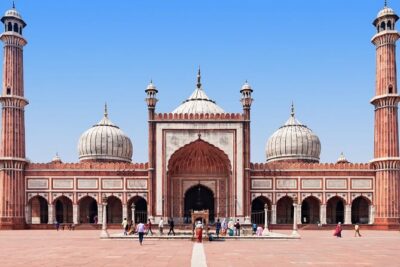
3-Day Delhi, Agra and Jaipur Private Tour – India Golden Triangle
Read our review →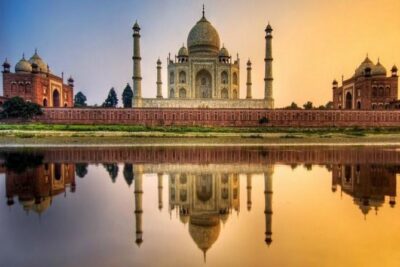
Four-Day Private Luxury Golden Triangle Tour to Agra and Jaipur From New Delhi
Read our review →
5 Nights 6 Days Private Golden Triangle Tour – Delhi Agra Jaipur
Read our review →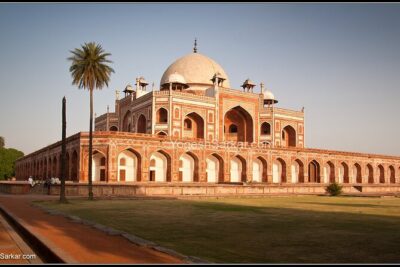

Private Car and Drive for Golden Triangle (4N/5D)
Read our review →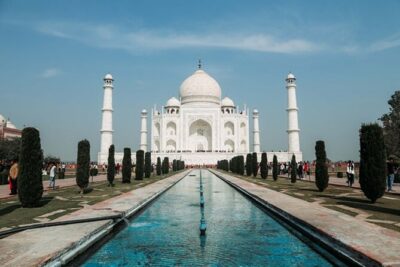
Private Golden Triangle Tour Delhi Agra Jaipur ( Top Rated )
Read our review →Browse the lists this tour appears in