
Reviewed · GOLDEN TRIANGLE TOURS
4-Nights 5-Days India’s Golden Triangle – Jaipur Agra Delhi Tour
Golden Triangle, powered by a private plan. This 4-night, 5-day route strings together Jaipur, Agra, and Delhi with a chauffeur-driven A/C vehicle and professional guides across the big sights. I especially like that pickup happens from your hotel, airport, or railway station, and bottled water keeps things sane during long days. The one snag to plan for is that monument entrance fees are not included, plus you will do moderate walking and need smart-casual clothing for temples.
What makes this tour work for real life is the pacing. You get enough time at the major stops to actually look closely, not just hold your phone up and sprint to the next gate. And because it is private, you are not sharing your day with strangers who want to “just grab photos” and disappear.
There is also a very practical head-up: the Taj Mahal is closed every Friday. If your dates land on a Friday, plan for that day to be adjusted around the closure.
In This Review
- Key highlights I’d circle before you book
- How this Golden Triangle tour actually feels on the ground
- Jaipur in one stretch: Hawa Mahal, City Palace, and Jantar Mantar
- Jal Mahal and Abhaneri step wells: the quieter side of Jaipur
- Fatehpur Sikri and the Agra approach: planning time before the Taj
- Tomb of Itimad-ud-Daulah and Agra Fort: building blocks before the big one
- Taj Mahal early morning: what to expect and how to time it
- Delhi classics after Agra: Qutub Minar, Red Fort, Humayun’s Tomb, Jama Masjid
- Price and logistics: what $340 covers, and what you must plan to pay
- Who should book this Golden Triangle tour
- What the service feels like, based on guide and driver feedback
- Should you book this Golden Triangle tour?
- FAQ
- What is included in the Golden Triangle tour price?
- Are hotel accommodations included?
- Are monument entrance fees included?
- Do I need to follow a dress code?
- Is the Taj Mahal open every day?
- What is the cancellation policy?
Key highlights I’d circle before you book
- Private A/C chauffeur vehicle that keeps transfers comfortable through traffic and distance
- Hotel, airport, or railway station pickup and drop-off so you are not piecing together rides
- A real guide for each city, with stops built around the best-known landmarks
- Early-morning Taj Mahal focus, with the kind of light that makes a difference
- UNESCO sites included in the mix, like Jantar Mantar, Fatehpur Sikri, and Qutub Minar
- Step-well stop at Abhaneri with a free entrance listed for that specific stop
How this Golden Triangle tour actually feels on the ground
This is a classic India “big three” route, but the private setup changes the experience. You start and end with pickup and drop-off, so you spend less mental energy figuring out timing, directions, and which auto-rickshaw to trust.
The sightseeing part is built around a simple promise: you get professional guidance at the key monuments in Jaipur, Agra, and Delhi. That matters more than it sounds when you are looking at layered Mughal and Rajput sites and trying to understand what you are seeing, instead of just collecting views.
You should also know what kind of day this is. The itinerary is packed with major landmarks, and the tour notes say moderate walking is involved. I would pack comfortable shoes even if your plan is mostly “sit, look, move, repeat.”
Finally, the price is not just for looking at monuments. The tour cost covers the chauffeur-driven vehicle, guide time for the three cities, bottled water, and the private nature of your group. Your add-ons are mostly predictable: hotels, meals, and entrance fees.
Golden Triangle tours readers book most in Jaipur:
- 3-Days Golden Triangle’s Private Tour
★ 5.0 · 69 reviews - Private 6-Day Golden Triangle Tour: Delhi, Agra, Jaipur by Car
★ 5.0 · 60 reviews - 4 Days Golden Triangle Tour – Private, Guided & All Inclusive
★ 5.0 · 27 reviews
Jaipur in one stretch: Hawa Mahal, City Palace, and Jantar Mantar
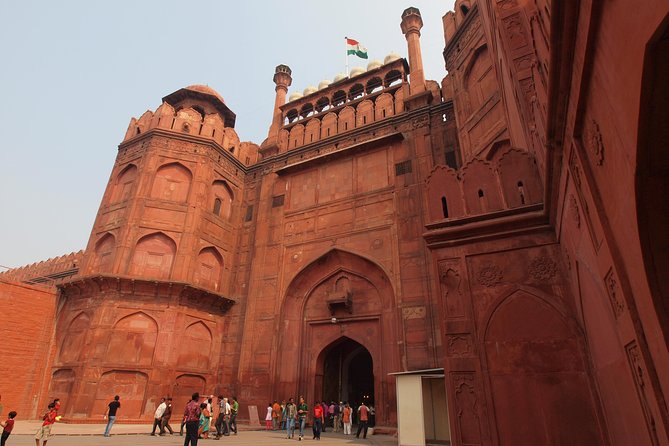
Jaipur kicks off with Hawa Mahal, the Palace of Wind. You are looking at famous curved latticework arches rising above the street, and it is tied to Sawai Pratap Singh’s idea that the royal household could observe life while keeping a kind of privacy. Expect to spend about an hour here, which is enough time to understand the structure and then appreciate why the façade is so instantly recognizable.
Next comes City Palace of Jaipur. This is not just a single building, it spreads out in a way that feels like multiple pockets of courtyards and gardens. The stop is listed for about an hour, and I think it is a good length if you like architecture and plan to wander a bit rather than rush.
Then you get Jantar Mantar, a UNESCO World Heritage Site and one of those places where you see math turned into stone. The largest stone sundial in the world is a headline, but the bigger value is that it was built by Rajput ruler Sawai Jai Singh and is still used as an astronomical observatory. You should come in ready to look up and understand instruments, not just take a few exterior photos.
If you like “read the building” travel, Jaipur works well in this tour format. You go from dramatic façade, to power and space at City Palace, to science you can still interpret in person.
Jal Mahal and Abhaneri step wells: the quieter side of Jaipur
Jal Mahal is a short stop, listed at about 30 minutes. It sits in Man Sagar Lake, so you see it partially from the shore rather than as a fully open palace view. Still, the time is enough to appreciate the red sandstone structure and its five stories.
This is also the kind of stop that helps the rest of the day feel less frantic. After Hawa Mahal and the palace complex, your eyes need a change of pace, and water views do that.
Then the tour shifts to Abhaneri, a village area known for the step wells and the Harshat Mata Temple. The standout here is the Chand Baori step well concept, and the stop is listed with free admission. The notes also mention an origin story for the name, linked to Abha Nagri, meaning city of brightness, then changing through mispronunciation.
Why do step wells belong in a Golden Triangle itinerary? Because they show how communities handled water long before modern supply. Even if you do not think of yourself as a “water architecture” person, Abhaneri gives you a different lens on daily life, especially in a region where heat can be intense.
If your ideal trip includes at least one stop that feels less like a museum and more like a place still living around a landmark, Abhaneri is a smart pick.
Fatehpur Sikri and the Agra approach: planning time before the Taj
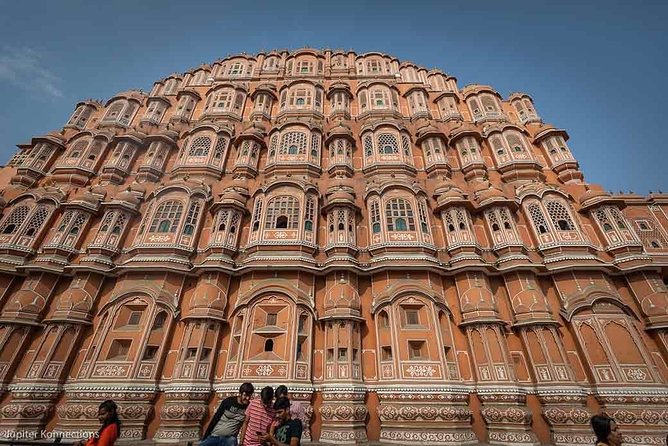
Before you fully hit Agra, the tour includes Fatehpur Sikri, about 40 km west of Agra. This is described as the short-lived Mughal capital during Emperor Akbar’s reign, and it is also listed as a UNESCO site. The architecture is a mix of Indian, Persian, and Islamic influences, which is exactly why people still stop here centuries later.
The listed stop time is about two hours. That is enough to see the major fortified layout and get a sense of why it was built and why it did not last forever. If you only have a day in the area, the time matters, and two hours prevents the “blink and you missed it” feeling.
Then comes Mehtab Bagh, the Moonlight Garden. This stop is about one hour and is aimed at a sunset-style view of the Taj Mahal across the Yamuna River. The important idea is alignment. The Taj gardens are positioned so that Mehtab Bagh creates a matching perspective, so you are not just looking at a garden, you are staging a viewpoint for the monument.
This is a stop I think is worth treating gently. Sit, watch the light shift, and let the sightline do its job. Even if you are exhausted from driving, it is the kind of moment that makes the next hours feel meaningful.
A few more Jaipur days to compare
- Jaipur: Private Full Day Sightseeing Tour By Car with Guide
★ 4.9 · 1,839 reviews - 3-Hour Morning Bike Tour of Jaipur
★ 5.0 · 1,253 reviews - Jaipur: Private Full-Day Sightseeing Tour by Tuk-Tuk
★ 4.8 · 573 reviews - Jaipur: Full-Day City Tour with Car, Guide & Skip-the-Line
★ 4.8 · 512 reviews
Tomb of Itimad-ud-Daulah and Agra Fort: building blocks before the big one
Once you are in Agra proper, the itinerary moves to the Tomb of Itimad-ud-Daulah. It is listed for about one hour and is often called the Baby Taj. The reason that nickname matters is not just marketing, it helps you expect a scaled-in approach to Mughal marble craftsmanship before you hit the full spectacle of the Taj Mahal.
Next is Agra Fort, about two hours. This fort is described as massive and built in red sandstone, created under Akbar, with palaces inside. The notes list Diwan E Aam and Khas Mahal, plus Pearl Mosque and Musamman Burj. There is also a political layer: it is said to be where Aurangzeb imprisoned his father, Shah Jahan.
I like this pairing because it makes the Taj feel less like an isolated icon. You see the fortress mindset first, then the mausoleum genius after. It changes how you interpret the whole Mughal story.
If you are prone to monument fatigue, keep your expectations simple here. Focus on scale at Agra Fort, and detail at Itimad-ud-Daulah. That way you do not try to memorize everything at once.
Taj Mahal early morning: what to expect and how to time it
The Taj Mahal stop is the centerpiece, listed for about three hours. The tour highlights emphasize a relative quiet early morning view, sometimes shrouded in mists and bathed in soft morning glow.
This is where timing matters more than almost any other stop. The notes describe the marble surfaces shifting from soft grey and yellow to pearly cream and bright white as light changes. If you have ever wondered why people sound so poetic about this place, that color shift is part of it. You really do see the monument in stages.
Plan your priorities before you arrive. If you only have one big monument day, Taj is the place to give your full attention. Save your shopping, casual wandering, and long meal breaks for later in the trip, not here.
Also remember the closure rule: the Taj Mahal is closed every Friday. If your schedule includes a Friday, ask how the operator will adjust the day’s plan before you finalize travel dates. Otherwise, you might end up with a lot of drive time and fewer minutes at the one site everyone came for.
Delhi classics after Agra: Qutub Minar, Red Fort, Humayun’s Tomb, Jama Masjid
After Jaipur and Agra, Delhi arrives with four major stops that cover different eras of Mughal and imperial power.
Qutub Minar is first, about one hour. It is a UNESCO site and includes the 73 m-high minaret. The tour notes call it the tower of victory, built by Qutab-ud-din Aibak after the defeat of Delhi’s last Hindu kingdom. That context matters, because you are not just looking at height, you are seeing how a city’s story gets marked in stone.
Then comes Red Fort in Old Delhi, about two hours. The fort, also called Lal Qalʿah, was built by Shah Jahan in the mid-17th century and is listed as UNESCO. This stop gives you a large-scale feel for Mughal fort design, plus the sense of being inside a major center of power.
Humayun’s Tomb follows, about two hours. The notes describe it as the resting tomb of Mughal emperor Humayun, commissioned by his first wife Empress Bega Begum in the 16th century. You also get an architectural detail: it is described as the first garden tomb in Asia, with design by Persian architects Mirak Mirza Ghiyas and his son Sayyid Muhammad. Garden tomb means you should expect walking paths and planned sightlines.
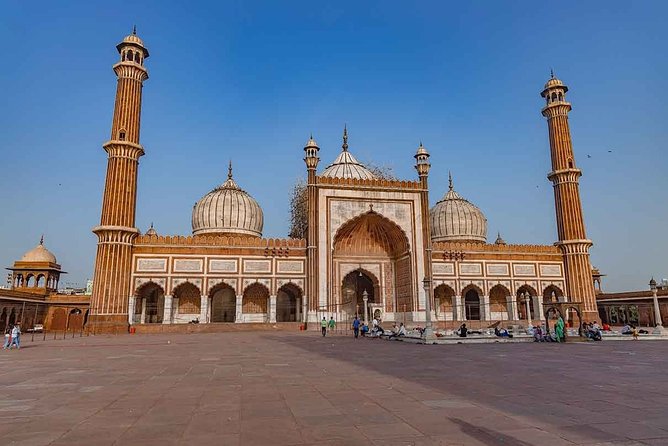
Finally, Jama Masjid takes about one hour. It is one of the largest mosques in India, built by Shah Jahan, and listed as the second largest on the subcontinent. It is also an example of Mughal architecture, so it fits neatly after the forts and tombs. If you want to understand Mughal style across building types, Delhi is where you see it connecting.
Price and logistics: what $340 covers, and what you must plan to pay
At $340 per person for a 5-day, 4-night Golden Triangle tour, the value depends on what you already have covered. Accommodation is not included, and neither are monument entrance fees or camera fees. Meals are also not included, and tips for drivers and guides are not included.
So what are you paying for, realistically? You are paying for the heavy-lift parts that eat up time and stress: pickup and drop-off, the chauffeur-driven A/C private vehicle, and professional guides for Delhi, Agra, and Jaipur, plus bottled water and a mobile ticket.
That makes this tour a good deal if you want a private setup without spending time on transport planning. It is also a strong choice if your group has different interests but you still want the same day structure, because your driver and guide can keep you moving while you decide what to linger over.
Where your budget can creep up is entrances and meals. Many of the biggest sites charge. The good news is the itinerary explicitly lists some free admissions, like Abhaneri and Fatehpur Sikri. But the major paid ones, like the Taj Mahal and most UNESCO-famous city sites, will require extra money.
If you are a careful budgeter, you will want to set aside a separate amount for entrances, plus a bit for transport-related incidentals like snacks and bottled water if you run out of the included supply.
Who should book this Golden Triangle tour
This tour fits best if you want a smooth, private pace across three cities with minimal navigation headaches. It is a good match for first-time visitors to India who feel overwhelmed by planning, especially with the stress of traffic and long distances.
It is also a solid fit if you care about having context. The itinerary is full of sites where a guide changes everything from confusion to clarity, like Jantar Mantar’s astronomical function and the Mughal-to-Rajput blend across the route.
If you hate structured days and want lots of free time to wander alone, this might feel like too much. The stop list is dense, and the tour notes say moderate walking is involved. You will enjoy it most if you are okay with active sighting days and comfortable shoes.
Finally, if you are traveling as a couple or a small family, a private tour usually pays off. The tour notes also mention group discounts, so it can make sense if you are traveling with friends.
What the service feels like, based on guide and driver feedback
The tour is private, but the real difference is the people running the day. In past feedback shared for this operator, drivers like Zaheer are praised for care and safety, with guests reporting they felt comfortable throughout the journey. Other drivers named include Jaheer, Rakesh, Lalan, Nadeem, and Shakir bhai, with common themes of punctuality, kindness, and flexibility to adjust plans when needed.
Guides named in the feedback include Nikhil and Manu, and the comments around them focus on explanations and smooth city navigation. The owner, Janu, also appears in responses, usually tied to easy communication and service follow-through.
I take that pattern seriously: in a tour like this, a good driver reduces stress on long transfers, and a good guide turns monuments from pretty objects into understandable places. You will feel that difference most on days when you are tired.
Should you book this Golden Triangle tour?
Book it if you want a private Golden Triangle with an A/C chauffeur vehicle, pickup and drop-off, and guides who handle the hard parts of logistics while you enjoy the sights. The price looks reasonable for what it includes, especially since your transfers and city guidance are covered.
Do not book it blindly if you are only thinking about the listed headline attractions. You must budget for hotel, meals, and entrance fees, and you need to respect the Taj closure on Fridays. If you land on a Friday, confirm the replacement plan before you pay for nonrefundable add-ons like hotels.
If you plan smart, wear comfortable shoes, and set aside time for early-morning Taj, this tour can give you a focused, high-value sweep of the Golden Triangle without the usual chaos.
FAQ
What is included in the Golden Triangle tour price?
The tour includes hotel or airport or railway station pickup and drop-off, a chauffeur-driven A/C private vehicle for sightseeing, professional informative tour guides for Delhi, Agra, and Jaipur monuments, and bottled water.
Are hotel accommodations included?
No. Accommodation or hotels are not included in the tour price.
Are monument entrance fees included?
No. Monument entrance fees and camera fees are not included. Some specific stops are listed with free admission, such as Abhaneri and Fatehpur Sikri, but you should still budget for paid sites.
Do I need to follow a dress code?
Yes. Dress code is smart casual, and short shorts or sleeveless tops are not recommended for temple visits.
Is the Taj Mahal open every day?
No. The Taj Mahal is closed every Friday.
What is the cancellation policy?
You can cancel up to 24 hours in advance for a full refund. If you cancel less than 24 hours before the experience starts, the amount you paid is not refunded.
Recently added around Jaipur
- Full-Day Jaipur Highlights with Local Guide & Private Vehicle★ 5.0 · 7 reviews
- Full Day trip to Ranthambore tiger reserve from Jaipur Hotels★ 5.0 · 11 reviews
- From Jaipur: Taj Mahal & Agra Tour with Transfer to Delhi by Car★ 5.0 · 30 reviews
- All Inclusive Private Taj Mahal & Agra Tour from Delhi by Car★ 5.0 · 20 reviews
- Experience the Best of Jaipur on a Full-Day Sightseeing Tour★ 5.0 · 33 reviews
- Jaipur Local Sightseeing Tour by Car and Driver★ 5.0 · 73 reviews
- Explore Jaipur Like Never Before★ 5.0 · 15 reviews
- Exclusive Block Print Workshop in Rajasthan★ 5.0 · 8 reviews
Golden Triangle Tours, compared.

3-Days Private Golden Triangle Tour: Delhi, Agra & Jaipur by Car
Read our review →3-Days Private Golden Triangle Tour: Delhi, Agra & Jaipur by Car
Read our review →
3-Day Delhi, Agra and Jaipur Private Tour – India Golden Triangle
Read our review →
Four-Day Private Luxury Golden Triangle Tour to Agra and Jaipur From New Delhi
Read our review →
5 Nights 6 Days Private Golden Triangle Tour – Delhi Agra Jaipur
Read our review →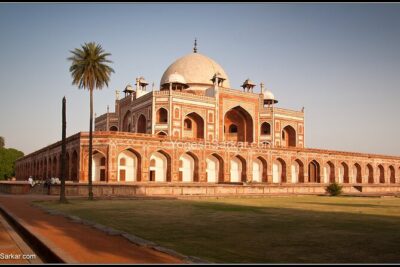

Private Car and Drive for Golden Triangle (4N/5D)
Read our review →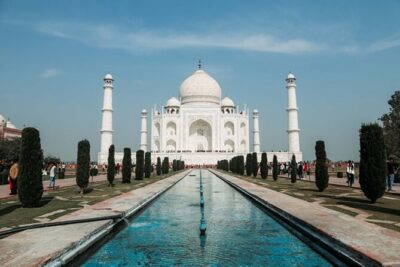
Private Golden Triangle Tour Delhi Agra Jaipur ( Top Rated )
Read our review →Browse the lists this tour appears in