
Reviewed · 4-DAY EXPERIENCES
4 Days Delhi Agra Jaipur Private Tour From Delhi
Golden Triangle in four days sounds intense. It is, but that is the fun part. You will see Delhi, Agra, and Jaipur with real historical context at each stop, plus a private driver and air-conditioned comfort so the long travel days do not feel endless.
I especially like two things. First, the logistics are handled for you, with hotel, airport, and railway pickup and drop-off in New Delhi, along with daily breakfast. Second, the tour is built around guides, not just a car ride, with a LiveTour guide and private guides at the major sights. One name that keeps coming up in feedback is guide Suraj Mani Sharma, praised for keeping the days running smoothly.
One consideration: monument entrance fees are not included, so you should plan for extra cash at several UNESCO sites (and remember that lunch, shopping, and any optional extras are also on you).
In This Review
- Key Highlights You’ll Care About on This 4-Day Loop
- How This Delhi-Agra-Jaipur Route Actually Feels
- Day 1 in Delhi: Qutub Minar, Lotus Temple, India Gate
- Qutub Minar: a UNESCO minaret with serious scale
- Lotus Temple: modern design, open to everyone
- India Gate: war memorial with a grand, simple presence
- Day 2 Through Old Delhi to Agra: Jama Masjid, Red Fort, Humayun’s Tomb, Raj Ghat
- Jama Masjid: the grand mosque of Shahjahanabad
- Red Fort: Mughal power along the Yamuna
- Humayun’s Tomb: the first great garden-tomb experience
- Raj Ghat: a simple black marble cenotaph for Gandhi
- The drive to Agra
- Day 3 in Agra and Fatehpur Sikri: Taj Mahal, Agra Fort, Then Jaipur
- Taj Mahal: the Persian-poetry masterpiece at UNESCO scale
- Agra Fort: Akbar’s red sandstone stronghold
- Fatehpur Sikri: a fortified city that used to be the capital
- Drive to Jaipur and overnight
- Day 4 Jaipur Essentials: Hawa Mahal, Jal Mahal Photos, City Palace, Jantar Mantar
- Hawa Mahal: wind-driven palace windows and royal tradition
- Jal Mahal: a palace in the water, view only
- City Palace of Jaipur: the royal seat in city form
- Jantar Mantar: ancient instruments that still function
- Back to Delhi for your flight
- Price and Value: What $190 Really Buys You Here
- Private Vehicle, Guides, and Timing: Small Things That Help a Lot
- You get transport without constant planning
- Guides help you slow down in the right places
- Bring the basics that match the itinerary
- Who This Tour Suits Best (And Who Might Want a Different Pace)
- Should You Book This Golden Triangle Tour?
- FAQ
- What is included in the tour price?
- Are monument entrance fees included?
- How long is the tour?
- Do you get pickup from Delhi airport and transfer to your hotel?
- Is the transportation private and air-conditioned?
- Will there be guides at the attractions?
- Is breakfast included?
- Are tips for the driver and guide included?
- What is the cancellation window?
Key Highlights You’ll Care About on This 4-Day Loop
- Private, air-conditioned car with pickup and drop-off across Delhi, Agra, and Jaipur
- UNESCO-heavy day design, including the Taj Mahal and multiple historic Delhi and Jaipur sites
- Built-in guided commentary, with private guides at stops so you actually understand what you are seeing
- A real mix of architecture types, from Indo-Islamic monuments to Mughal gardens and royal Jaipur planning
- Long-but-managed travel, with hotel check-ins in Agra and Jaipur so you are not stuck on the road all night
- Guide support that gets mentioned often, including Suraj Mani Sharma for pacing and clarity
How This Delhi-Agra-Jaipur Route Actually Feels
This is a classic Golden Triangle tour, but the “private” part matters. You are not sharing the van with a big bus crowd, so your day stays flexible when timing gets tight at busy monuments. The route also gives you an easy rhythm: morning sightseeing, a drive, then hotel time, which is exactly what you want when you have only four days.
You will be moving through three very different vibes. Delhi starts more urban and layered, with Sultanate-era ruins, a modern Bahá’í temple, and a grand war memorial. Agra is all about Mughal showmanship, especially around the Taj. Jaipur goes royal and mathematical, with wind-driven palace design and an astronomical instrument park that still works.
It is not a slow sightseeing vacation. It is a “see the big icons and understand them” plan. If you like that style, you will be very happy here.
A few more New Delhi days to compare
- Old & New Delhi City Tour – Half or Full Day Options Available
★ 5.0 · 4,811 reviews - Half Day Private Delhi City Tour
★ 5.0 · 4,474 reviews - Same Day Taj Mahal, Agra Fort & Baby Taj Tour from Delhi by Car
★ 5.0 · 4,304 reviews
Day 1 in Delhi: Qutub Minar, Lotus Temple, India Gate
Day one begins with pickup and transfer to your hotel, then a half-day Delhi tour after check-in and freshening up. The timing is helpful if you are arriving by flight, because you are not forced into an early morning start without sleep.
Qutub Minar: a UNESCO minaret with serious scale
Qutub Minar is part of the Qutb complex in Delhi’s Mehrauli area, and it is one of the most famous monuments in the city. It is about 72.5 meters tall, and it is considered the second tallest monument of Delhi. What I like about visiting here is that the history is written into the building itself. Construction began in 1192 under Qutb Ud-Din-Aibak, and later rulers added stories and refinements, including Iltutmish and Firoz Shah Tughlaq.
Practical note: wear shoes you can walk in for a while. Even when a site is “one hour,” you will still be doing stairs and angled viewpoints.
Lotus Temple: modern design, open to everyone
Next is the Lotus Temple, a striking white building shaped like a lotus flower. It is dedicated to the Bahá’í faith, and it is described as open to all regardless of nationality, religion, race, or gender. The architect is Canadian Fariborz Sahba, and construction finished in 1986.
What makes this stop valuable in a Golden Triangle itinerary is the contrast. Qutub Minar is medieval stone power. The Lotus Temple is clean modern geometry and quiet space. It gives your brain a break before the big monuments later.
Another way to spend a day in India:
- Taj Mahal Day Tour from Delhi by Superfast Train – TOP RATED TOUR
★ 5.0 · 4,166 reviews - Full Day Taj Mahal, Agra Fort & Baby Taj Tour from Delhi by Car
★ 5.0 · 3,647 reviews - From Delhi: Taj Mahal & Agra Private Day Trip with Transfers
★ 4.9 · 3,181 reviews - Taj Mahal Tour from Delhi by Express Train (Viator Award Winner)
★ 5.0 · 2,849 reviews
India Gate: war memorial with a grand, simple presence
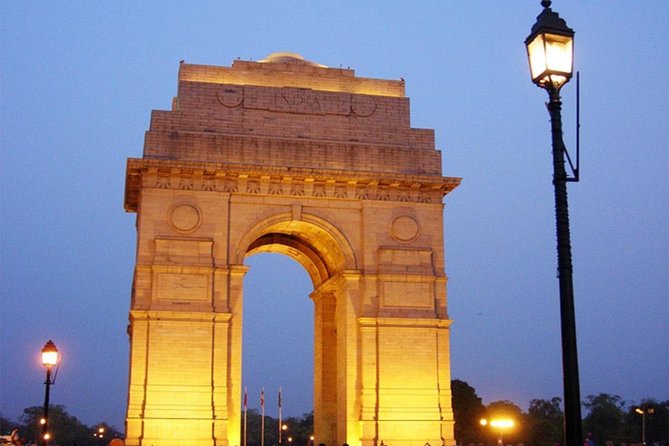
India Gate is the All India War Memorial on Rajpath, designed by Sir Edwin Lutyens. It is about 42 meters tall, and it is often compared to other famous triumphal arches worldwide. It also has a real national rhythm, hosting the Republic Day Parade each year.
This is a short stop, but it helps you get your bearings in Delhi. The area feels like the city’s ceremonial spine, which makes later drives and landmarks easier to place.
Day 2 Through Old Delhi to Agra: Jama Masjid, Red Fort, Humayun’s Tomb, Raj Ghat
Day two is where Delhi gets more intense in a good way. After breakfast and checkout, you head into Old Delhi for a set of Mughal-era landmarks, then you wind down with a reflective stop at Raj Ghat, before driving to Agra.
Jama Masjid: the grand mosque of Shahjahanabad
Jama Masjid sits in the older part of Delhi near Chandni Chowk. The tour highlights that it took an enormous effort for its time: a cost of one million rupees, 5,000 workers, and six years of construction from 1650 to 1656. It is one hour on the schedule, which usually means you will see the main courtyard and take in the scale.
Tip for your visit: plan to be respectful of mosque rules, including dress expectations. Even if you are just taking photos, you will want to keep your movements calm.
Red Fort: Mughal power along the Yamuna
The Red Fort, also called Quila-e-Mubarak, sits on the Yamuna’s banks and was part of the medieval city of Shahjahanabad. It is a UNESCO-listed complex and a major showcase of Mughal architecture. You get about an hour here.
One useful thing to know before you arrive: the Red Fort is not just a building. It is a whole fort-and-palace world. If you only rush through, you miss the logic of the place. Go slow enough to notice the different structures inside the complex.
Humayun’s Tomb: the first great garden-tomb experience
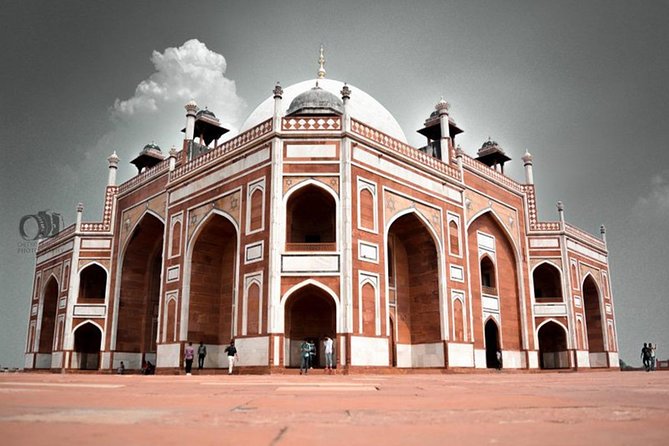
Humayun’s Tomb is in the Nizamuddin East area, and it is described as the first garden-tomb in the Indian subcontinent. It was commissioned by Empress Bega Begum around 1569-70. The UNESCO listing is noted as 1993, and what stands out here is the blend of Persian influences and Mughal design, plus the use of red sandstone on a massive scale.
If you have ever felt that Mughal monuments are all about drama, this tomb is a different mood. Gardens, symmetry, and that layered calm is a nice reset after the political weight of Old Delhi.
Raj Ghat: a simple black marble cenotaph for Gandhi
Raj Ghat is the memorial where Mahatma Gandhi was cremated after his assassination in 1948. The cenotaph is described as a simple black marble structure amid a garden, and the stop is short, about 30 minutes.
This is one of those stops that changes your pace. It is not about photos, it is about meaning and stillness. Build in a minute to just sit and look, even if you feel a little rushed.
The drive to Agra
After Delhi sightseeing, you drive to Agra and check into your hotel for an overnight stay. The itinerary does not spell out the exact departure time, but the order is clear: you are meant to get the key sights, then sleep. That matters, because Agra’s main event, the Taj Mahal, is the next day.
Day 3 in Agra and Fatehpur Sikri: Taj Mahal, Agra Fort, Then Jaipur
Day three is the big centerpiece day. You visit the Taj Mahal and Agra Fort, then continue to Fatehpur Sikri before driving on to Jaipur.
Taj Mahal: the Persian-poetry masterpiece at UNESCO scale
The Taj Mahal is a UNESCO World Heritage Site and part of the Mughal legacy. The tour description emphasizes the design and approach: it is laid out in a rectangular plan, reached through a massive gateway with an arch and alcoves, and the entrance area includes water channels and fountains.
The famous visual effect is also mentioned, the reflection in the Yamuna. Even without getting fancy about photography settings, the point is simple: you will likely see the monument in layers, from gate to main view.
Practical tip: plan your time buffer inside your mind. Two hours can feel short once you start noticing details, like the symmetry and the way different angles change the view.
Agra Fort: Akbar’s red sandstone stronghold
Agra Fort, also UNESCO-listed, is described as a masterpiece made entirely of red sandstone on the Yamuna’s right bank. It was built by Emperor Akbar in 1573 and served as a Mughal residence until 1638. The fort is about 2.5 kilometers from the Taj Mahal, which is convenient for a first-timer because it gives you a sense of geography.
This stop is about one hour, which is enough to appreciate the scale and the fort-palace idea. If you only focus on one side, you might miss the bigger planning.
Fatehpur Sikri: a fortified city that used to be the capital
Fatehpur Sikri is about 40 km from Agra. The itinerary calls it a town in Agra district and a major tourist attraction, with buildings mainly made from red sandstone. It was founded by Mughal Emperor Akbar in 1571, and it served as the capital for 15 years.
You will typically see key highlights such as Jodha Bai’s Palace, the Jama Mosque, Buland Darwaza, and the Tomb of Salim Chisti. The description also notes the imperial complex as pavilions laid out in formal geometry, inspired by Arab and central Asian tent encampments.
What makes this stop worth your time: it explains why the Golden Triangle is more than just “big famous monuments.” Fatehpur Sikri gives you the idea of a whole planned capital, not just a single mausoleum.
Drive to Jaipur and overnight
After Fatehpur Sikri, you drive to Jaipur and check in overnight. This helps you avoid the most exhausting kind of sightseeing, the kind where you stay in one place too long. Jaipur tomorrow is heavy on royal architecture, so sleeping here is a win.
Day 4 Jaipur Essentials: Hawa Mahal, Jal Mahal Photos, City Palace, Jantar Mantar
Day four keeps you in Jaipur with several headline sights, then you drive back to Delhi for the airport.
Hawa Mahal: wind-driven palace windows and royal tradition
Hawa Mahal, the Palace of Wind, is built at the intersection of Badi Chaupad and built by Maharaja Sawai Pratap Singh in 1799. The key feature is the mesh of small windows designed to let cool wind in, which helped keep the palace comfortable in the hot months.
The itinerary also connects the architecture to royal custom, the women of the royal house could watch street life and festivities without being seen from outside. That context makes the building more interesting than just a photo facade.
Expect a shorter visit, about 30 minutes. Still, it is worth stepping back to get the full shape.
Jal Mahal: a palace in the water, view only
Jal Mahal is a photo stop, and the tour notes that entry inside the fort is prohibited. You get the view from a distance, and the description says boating views are enough to mesmerize you.
So treat this as a pause, not a long exploration. It also helps break up the day visually before the major royal complexes.
City Palace of Jaipur: the royal seat in city form
City Palace is one of Jaipur’s most famous attractions, built between 1729 and 1732 by Maharaja Sawai Jai Singh. The palace complex once occupied one-seventh of the walled city and served as the seat of the Maharaja of Jaipur.
You get about two hours, which is the right amount for a large palace complex. If you want good photos, go early in your slot so the light behaves better.
Jantar Mantar: ancient instruments that still function
Jantar Mantar is UNESCO-listed and described as containing nineteen instruments made of stone and brass. It was built by Raja Sawai Jai Singh between 1727 and 1733, designed so observers could note the position of heavenly bodies with the naked eye.
This is one of my favorite stops on itineraries like this because it is not just “look at a building.” It is a science-and-art blend, and the fact that it still works as intended is the most grounded kind of wow.
Back to Delhi for your flight
Finally, you drive to Delhi airport after Jaipur sightseeing. The itinerary lists it as about 5 hours, so keep your energy for the ride. Also, remember that this is the last day, so you may want to buy any small souvenirs earlier.
Price and Value: What $190 Really Buys You Here
At $190 per person, the big value is that you are not paying only for your entrance tickets. You are paying for an organized four-day route with private transportation, guides, and included basics like daily breakfast.
Included items that drive value:
- Private air-conditioned car with driver
- LiveTour guide plus private guides at each stop
- Water bottle
- Hotel pickup and drop-off in New Delhi
- Accommodation or hotel if your option includes it
- Daily breakfast in the hotel
What is not included:
- Monument entrance fees
- Tips for driver and guide
- Anything not explicitly listed (often lunch is the missing line item for first-timers)
So yes, $190 can feel like a bargain compared with paying for a car and guide separately in India. But you should still budget for entrances. For the Taj Mahal and the UNESCO sites, those fees add up, and you do not want surprise math on the day you are ready to enjoy the sites.
Private Vehicle, Guides, and Timing: Small Things That Help a Lot
Here is what makes this style of private tour work in real life.
You get transport without constant planning
The private car is air-conditioned, and you get New Delhi pickup and drop-off, plus travel between cities. That means your day is governed by sightseeing timing, not by figuring out routes or negotiating.
Guides help you slow down in the right places
A driver gets you places. Guides get you meaning. The itinerary specifically says private guides at each stop provide historical commentary throughout the trip, and the LiveTour guide supports the overall flow.
In particular, the guide quality comes through in feedback, with Suraj Mani Sharma praised for managing each day to perfection and making the trip memorable. Even if your guide is different, you should expect the same goal: keep you moving, but do not reduce monuments to quick photo stops.
Bring the basics that match the itinerary
You will likely walk more than you expect at palaces and tombs. Wear comfortable shoes. Carry a light layer because you can get temperature swings between morning and afternoon. And because water bottle is included, it is nice to refill where possible.
Also plan for the mental load of a four-day pace. If you want deep reading and museum-level detail, this tour might feel fast. If you want the big monuments plus context, it is a great fit.
Who This Tour Suits Best (And Who Might Want a Different Pace)
This tour fits best if you want:
- A first Golden Triangle experience with the key UNESCO stops
- Private comfort and simplified logistics
- Guided commentary so you understand what you are seeing
You might not love it if you:
- Want unstructured time in each city, with long breaks and lots of independent wandering
- Prefer to pay only for what you want, because entrance fees are not included
- Get tired with back-to-back days that mix major sights and city-to-city drives
Should You Book This Golden Triangle Tour?
I would book it if you want a clean, organized way to hit Delhi, Agra, and Jaipur without scrambling for transport or coordinating guides. The included setup, especially the private air-conditioned vehicle, hotel pickup and drop-off, daily breakfast, and guided stops, makes this a strong value for four days.
Before you confirm, do one practical thing: set aside a realistic budget for monument entrance fees and tips. Once you do that, the rest of the experience is the kind of trip where you remember the places, not the headaches.
FAQ
What is included in the tour price?
The tour includes a private AC car with driver, water bottle, LiveTour guide, hotel pickup and drop-off in New Delhi, accommodation or hotel if you select that option, and daily breakfast in the hotel.
Are monument entrance fees included?
No. Monument entrance fees are not included, so you will need to pay them at the sites.
How long is the tour?
It is listed as 4 days approximately.
Do you get pickup from Delhi airport and transfer to your hotel?
Yes. The itinerary includes pickup from the airport and transfer to the hotel on day one, and hotel pickup and drop-off are included.
Is the transportation private and air-conditioned?
Yes. The included transportation is a private AC car with a driver.
Will there be guides at the attractions?
Yes. You have a driver guide, plus private guides at each stop to provide historical commentary throughout the trip.
Is breakfast included?
Yes. Daily breakfast in the hotel is included.
Are tips for the driver and guide included?
No. Tips for the driver and guide are not included.
What is the cancellation window?
You can cancel up to 24 hours in advance of the experience for a full refund.
Recently added around New Delhi
- Private Agra Day Tour★ 5.0 · 14 reviews
- Private Same day Jaipur Tour from New Delhi★ 5.0 · 82 reviews
- Taj Mahal,Agra fort and Baby Taj tour from Delhi by Express train★ 5.0 · 7 reviews
- From Delhi: Full Day TajMahal & Agra Fort with 5 Star Lunch★ 5.0 · 64 reviews
- Taj Mahal & Agra City Private Tour from Delhi by Car – Fast Entry★ 5.0 · 13 reviews
- All Inclusive: Same day Taj Mahal Tour From Delhi★ 5.0 · 111 reviews
- Same Day Tour of Taj Mahal with Our Real Historical Experience★ 5.0 · 42 reviews
- Same Day Agra/Taj Mahal Tour from Delhi : Private & all inclusive★ 5.0 · 38 reviews
4-Day Experiences, compared.
Private Luxury Delhi – Agra – Jaipur Golden Triangle Tour – 3 Nights 4 Days
Read our review →Golden Triangle & Ranthambore: 4-Day Private Tour from Delhi
Read our review →
Private Golden Triangle Tour 3 Night/4 Days – All Inclusive
Read our review →
4 Days Best of Kerala Tour with Private Houseboat, Sightseeing & Car
Read our review →
4 Days Private Golden Triangle Tour to Agra and Jaipur from Delhi
Read our review →
4 Day Golden Triangle with Ranthambore Tiger Safari Tour from Delhi
Read our review →
4-Day Private Delhi, Agra & Jaipur with Ranthambore Tiger Safari
Read our review →Browse the lists this tour appears in