
Reviewed · GOLDEN TRIANGLE TOURS
4-Day Luxury Golden Triangle Tour to Agra and Jaipur From Delhi
A four-day shortcut through India’s most famous scenes. This private luxury Golden Triangle tour links sunrise at the Taj Mahal with major Delhi and Jaipur landmarks, all handled by a private AC car plus live guides in each city. You get the wow-factor of these sights, but with less guesswork and more time actually looking.
Two things I really like: first, the trip is built around heavyweight monuments, including the Taj Mahal at sunrise and Jaipur’s forts and palaces. Second, the on-the-ground guidance is continuous, so you’re not wandering and trying to decode everything solo. One drawback to plan for is that monument entry tickets are not included, so you’ll need extra budget for each site.
In This Review
- Key highlights worth knowing
- What makes this Golden Triangle feel truly luxury
- Delhi Day 1: Qutub Minar, Humayun’s Tomb, Jama Masjid, Chandni Chowk
- Qutub Minar, the landmark that sets the tone
- Humayun’s Tomb, Mughal garden design you can feel
- Jama Masjid, big-scale Mughal mosque architecture
- Chandni Chowk, where the trip turns human-scale
- Agra Day 2: Taj Mahal at sunrise plus Agra Fort
- Taj Mahal sunrise, light that changes the mood
- Agra Fort, where the empire lived in layers
- The Fatehpur Sikri time-capsule day
- Jaipur Day 4: Amber Fort, City Palace, Jantar Mantar, Hawa Mahal
- Amber Fort, mirror-light in Sheesh Mahal
- City Palace, Mughal and Rajput mixed into one complex
- Jantar Mantar, architecture that measures the sky
- Hawa Mahal, the honeycomb façade of 953 windows
- Price and what you still need to pay for
- The driver and guide factor, why it changes your day
- Should you book this Golden Triangle tour?
- FAQ
- What cities does this Golden Triangle tour cover?
- Is pick-up and drop-off included?
- Do you travel in a private air-conditioned vehicle?
- Is there a live guide during the visits?
- Are monument entry tickets included?
- Is hotel accommodation included?
- Do I get a ticket for this tour on my phone?
- What is the cancellation policy?
- Where does the tour start?
Key highlights worth knowing
- Taj Mahal at sunrise for the soft light and big-photo impact
- Private AC car all tour, with pick-up and drop-off in Delhi
- Live tour guides in each city, with English-speaking support in practice
- Old Delhi street sights plus major UNESCO stops, all in one day
- Jaipur forts and palaces in a focused route, including Amber Fort and Hawa Mahal
- Fatehpur Sikri admission listed as free on this plan
What makes this Golden Triangle feel truly luxury
Luxury here is not about marble floors and room service menus. It’s about removing friction. You start with pick-up and drop-off, then you’re in a private, air-conditioned vehicle for the entire tour, with a personal driver. That matters a lot in India, where traffic patterns can turn a “simple transfer” into a long day if you’re doing it on your own.
You also get live tour guides in each city. That’s the difference between seeing monuments and understanding them. Even if you’re not the type to read every plaque, a guide can point out what you should notice right now, like design choices, historical context, and what to look for on the façade and inside.
On top of that, the practical extras are included: mineral water bottles, and the tour covers all toll taxes and parking. Those sound minor until you’re traveling all day. They help keep your budget from turning into a pile of surprise receipts.
One more value point: the package includes 3-star hotel accommodation with breakfast if you select that option. So you can travel with less daily decision-making. If you’re booking without the hotel option, you should be ready to handle lodging separately.
Golden Triangle tours readers book most in New Delhi:
- 3-Days Private Golden Triangle Tour: Delhi, Agra & Jaipur by Car
★ 5.0 · 1,107 reviews - 3-Days Private Golden Triangle Tour: Delhi, Agra & Jaipur by Car
★ 5.0 · 1,098 reviews - 3-Day Delhi, Agra and Jaipur Private Tour – India Golden Triangle
★ 5.0 · 812 reviews
Delhi Day 1: Qutub Minar, Humayun’s Tomb, Jama Masjid, Chandni Chowk

Your Delhi day hits a smart mix of UNESCO-scale monuments and the energy of Old Delhi. The route is paced as a string of high-impact stops, each given around an hour, so you’re not stuck at one place while the rest of the day slips away.
Qutub Minar, the landmark that sets the tone
Qutub Minar is a UNESCO World Heritage Site and one of the most iconic monuments in India. It rises to 73 meters (240 feet) and is famous for its Indo-Islamic style. Construction started with Qutb-ud-din Aibak in 1193 AD and was completed by Iltutmish.
What makes this stop feel special is the craftsmanship. The tower uses red sandstone and marble, with intricate carvings and Quran verses inscribed on its walls. The tower is also described as having five distinct stories, each marked by a projecting balcony. Even from outside, it gives you that “okay, I’m in the right place” feeling.
Humayun’s Tomb, Mughal garden design you can feel
Next comes Humayun’s Tomb, another UNESCO site and a major Mughal-era mausoleum. It was built in the 16th century and is considered an important architectural precursor to the Taj Mahal.
Look for the red sandstone base, with white marble inlays and detailed carvings. The tomb sits in a Charbagh garden, the four-part garden style that uses paths and water channels to divide the space into squares. This is the kind of design that makes the building feel calm, even when the city is not.
A few more New Delhi days to compare
- Old & New Delhi City Tour – Half or Full Day Options Available
★ 5.0 · 4,811 reviews - Half Day Private Delhi City Tour
★ 5.0 · 4,474 reviews - Same Day Taj Mahal, Agra Fort & Baby Taj Tour from Delhi by Car
★ 5.0 · 4,304 reviews - Taj Mahal Day Tour from Delhi by Superfast Train – TOP RATED TOUR
★ 5.0 · 4,166 reviews
Jama Masjid, big-scale Mughal mosque architecture
Jama Masjid is one of India’s largest mosques and sits in the heart of Old Delhi. It was built by Shah Jahan between 1644 and 1656, using red sandstone and white marble.
The size is part of the experience: the courtyard can accommodate up to 25,000 worshippers. The main prayer hall is adorned with intricate marble carvings and Quran inscriptions, and the mosque also houses relics, including an ancient Quran copy written on deer skin. That detail alone makes it feel more than just a photo stop.
Chandni Chowk, where the trip turns human-scale
To round out the day, you head into Chandni Chowk, a 17th-century market area built by Shah Jahan and designed by his daughter, Jahanara Begum. The name means moonlight square, linked to the market’s location opposite the Red Fort and the way moonlight could reflect off white marble.
This is where your day gets lively in a very real way: narrow lanes, busy street stalls, and everything from textiles to jewelry to spices and street food. If you’re the kind of traveler who likes to watch how cities actually work, this is your payoff. If you prefer quiet, this is the one moment you’ll want to move deliberately and keep your energy steady.
Agra Day 2: Taj Mahal at sunrise plus Agra Fort
Agra is where the Golden Triangle earns its reputation. The biggest draw is the Taj Mahal at sunrise, then you move into Agra’s imperial power base with Agra Fort.
Taj Mahal sunrise, light that changes the mood
The Taj Mahal is a white marble mausoleum built by Shah Jahan in memory of Mumtaz Mahal. Construction began in 1632 and finished in 1653, with thousands of artisans involved.
This plan gives you about 3 hours, which is useful because the Taj Mahal is all about details. The symmetry, the inlay work, and the large dome surrounded by four smaller domes are the big visual anchors. But it’s the setting that keeps pulling your eyes back: the mausoleum sits in a Mughal garden with reflecting pools.
You’ll also hear the classic detail that the marble changes color with sunlight, appearing pinkish in the morning and milky white in the evening, and even more magical under moonlight. Since this experience is timed for sunrise, the morning tones are the whole point.
Agra Fort, where the empire lived in layers
After the Taj, Agra Fort takes you inside the Mughal story. It was built by Emperor Akbar in the late 16th century and served as the main residence of Mughal emperors until the capital shifted to Delhi in 1638.
Agra Fort is made of red sandstone and includes palaces, mosques, and halls that blend Hindu and Islamic architectural styles. Two areas stand out in this plan: Jahangir Palace and Khas Mahal. Jahangir Palace features intricate stone carvings, marble inlays, and gardens. Khas Mahal is a white marble palace built by Shah Jahan for his daughters, and it offers views of the Yamuna River.
If you love architecture that feels layered rather than single-purpose, Agra Fort is where you’ll slow down and look around.
The Fatehpur Sikri time-capsule day

Fatehpur Sikri is a different kind of experience from the Taj. It’s a historical city near Agra that served as the Mughal capital from 1571 to 1585 before being abandoned, with one explanation being lack of water supply. Whatever the reason, the result is a remarkably well-preserved site that feels like a whole chapter frozen in place.
This stop is planned for around 3 hours, which is just right for seeing the main structures without feeling rushed. The city’s architecture is described as a blend of Hindu, Persian, and Islamic styles, and that mix is the point.
Your signature highlight here is Buland Darwaza, the “Gate of Magnificence,” described as the tallest gateway in the world and the main entrance to the city. It’s the kind of structure that makes you stop walking and just stare, because it looks built for showmanship.
Admission for this stop is listed as free, which is a practical win on a budget-heavy trip.
Jaipur Day 4: Amber Fort, City Palace, Jantar Mantar, Hawa Mahal
Jaipur is royal architecture with personality. This day is structured around forts and palaces, so you get big exteriors and detailed interiors, plus one stop that’s about science and observation.
Amber Fort, mirror-light in Sheesh Mahal
Amber Fort, also called Amer Fort, sits near Jaipur on a hilltop. It was built in the late 16th century by Raja Man Singh I and expanded by Raja Jai Singh I. The architecture is described as a blend of red sandstone and marble, mixing Hindu and Mughal styles.
Amber Fort is known for its artistic Hindu elements, including ramparts, gates, and cobbled paths. If you’re the type who likes to imagine what a place would feel like during a royal procession, this fort gives you enough to work with.
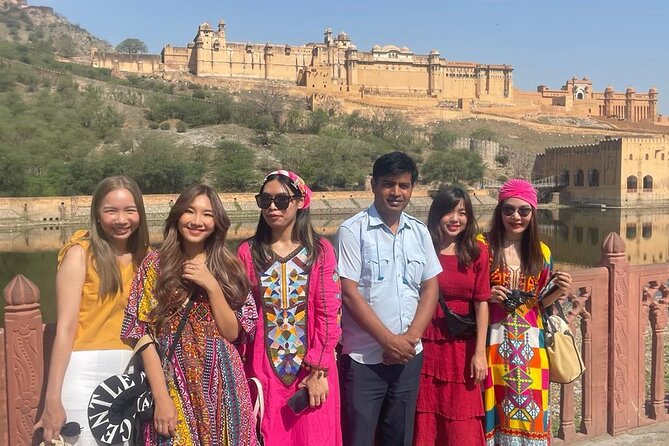
The standout interior highlight listed is Sheesh Mahal (Mirror Palace). It’s famous for its mirror work, which reflects even small rays of light across the interiors. This is the stop where photos really matter, because the effect is visual, not just historical.
City Palace, Mughal and Rajput mixed into one complex
Next is the City Palace of Jaipur, built in the 18th century by Maharaja Sawai Jai Singh II, the founder of Jaipur. The complex blends Mughal and Rajput styles and stretches across courtyards, gardens, and buildings.
One key highlight in this plan is Chandra Mahal, a seven-story palace. It’s still described as the residence of the royal family, and it’s decorated with intricate artwork, mirrors, and paintings. Even if you don’t catch every detail, you’ll see the design logic: multiple levels, multiple courtyards, and a layout that feels intentionally theatrical.
Jantar Mantar, architecture that measures the sky
Then comes Jantar Mantar, an astronomical observatory built by Maharaja Jai Singh II in the 18th century. The name translates to instrument for calculation. This site has 13 architectural astronomy instruments designed to observe celestial bodies with the naked eye.
You’ll see how the instruments were used to measure time, predict eclipses, track stars’ locations as they move, and determine celestial altitudes and related ephemerides. This is a great balance stop if you want a break from fort walls and palace courtyards and still keep the “wow” meter high.
Hawa Mahal, the honeycomb façade of 953 windows
Finally, Hawa Mahal, the Palace of Winds, built in 1799 by Maharaja Sawai Pratap Singh. It’s an iconic Jaipur landmark and an example of Rajputana architecture, built from red and pink sandstone.
The big visual is the five-story exterior that resembles a beehive, with 953 small windows, or jharokhas, covered in latticework. This is the stop that makes Jaipur feel instantly recognizable from far away, and it works especially well if you like architecture that looks like it was designed for light and air, not just decoration.
Price and what you still need to pay for
This tour is priced at $290 per person for a roughly 4-day experience from Delhi. That’s not budget travel, but it can be good value for what you’re getting, mainly because the plan bundles the parts that usually cost you time and energy.
Here’s what’s included:
- Pick-up and drop-off
- Private AC car for the entire tour
- Live tour guide in each city
- Mineral water bottle
- Toll taxes and parking
- 3-star hotel with breakfast only if you choose the hotel option
And what’s not included:
- Monuments entry tickets
- Food
- Any personal expenses
So the true cost depends on two things you control: how many paid sites you enter, and whether you choose the hotel option with breakfast. If you already know you want to see everything on the list, the main financial swing is usually the entry tickets and meals.
Where the value really shows is on comfort and coordination. You’re not negotiating with multiple transport providers, and you’re not trying to line up guides city by city. The private driver plus live guidance is the piece that turns “big famous sights” into a smoother, less stressful trip.
The driver and guide factor, why it changes your day
The strongest theme in the trip feedback you’ll likely hear around this kind of service is how the driver and guides handle the day. People consistently bring up:
- Friendly, professional driving
- Smooth communication
- Knowledge plus good English
- Flexibility when plans need adjustment
- Help with photo spots and timing
You may even hear names like Khan, Zainul Khan, Rajeev, Imran, or Rajaeev attached to these strengths. The practical takeaway for you is this: you should plan to ask questions early. Ask what the best photo angles are, where you can take a quick break, and how much time you should budget for each site so you don’t feel rushed.
Also, keep your expectations realistic about the schedule. This is a monument-heavy route. If you want extra downtime, you’ll need to tell your driver and guide at the start, because it’s a private tour but the pacing still follows a set plan.
Should you book this Golden Triangle tour?
Book it if you want a private, guided, air-conditioned Golden Triangle that hits the key Delhi, Agra, and Jaipur highlights without forcing you to coordinate everything yourself. It’s especially a smart fit for first-timers, couples, or small groups who want comfort while still seeing top monuments like Taj Mahal at sunrise and Amber Fort.
I’d think twice if you hate early starts or you’re on a tight budget that depends on keeping every extra payment out. The big practical catch is that entry tickets and food are not included, and the hotel is only included with breakfast if you select that option.
If you’re okay with those trade-offs, this is a very workable way to see the Golden Triangle fast, with less stress and better guidance than most DIY versions.
FAQ
What cities does this Golden Triangle tour cover?
It covers New Delhi, Agra, and Jaipur, with sightseeing in each city across the 4 days.
Is pick-up and drop-off included?
Yes. Pick up and drop off are included.
Do you travel in a private air-conditioned vehicle?
Yes. You get a private AC car for the entire tour.
Is there a live guide during the visits?
Yes. There is a live tour guide in each city.
Are monument entry tickets included?
No. Monument entry tickets are not included.
Is hotel accommodation included?
Hotel accommodation is included only if you select the option for 3-star hotel with breakfast.
Do I get a ticket for this tour on my phone?
Yes. The tour includes a mobile ticket.
What is the cancellation policy?
You can cancel for a full refund if you cancel up to 24 hours in advance. Free cancellation is offered under that timeframe.
Where does the tour start?
The tour starts in New Delhi, India, since it includes pick-up and drop-off there.
Recently added around New Delhi
- 3 Days Golden Triangle Tour with superior Hotels and Transport★ 5.0 · 8 reviews
- Private Taj Mahal and Mathura tour from Delhi to by car★ 5.0 · 8 reviews
- Private 3-Day Luxury Golden Triangle Tour to Agra and Jaipur From New Delhi★ 5.0 · 7 reviews
- Private 11 Days Golden Triangle Tour with Khajuraho and Varanasi★ 5.0 · 17 reviews
- 2 Day Agra Overnight Taj Mahal Tour from Delhi★ 5.0 · 8 reviews
- Taj Mahal, Agra Fort & Elephant Rescue Sanctuary Private Day Trip★ 4.5 · 19 reviews
- Private Tour, The Portraits of Old and New Delhi with Pickup Included★ 5.0 · 18 reviews
- 8-Days Golden Triangle on Bicycle – Premium Private Tour★ 5.0 · 6 reviews
Golden Triangle Tours, compared.

3-Days Private Golden Triangle Tour: Delhi, Agra & Jaipur by Car
Read our review →3-Days Private Golden Triangle Tour: Delhi, Agra & Jaipur by Car
Read our review →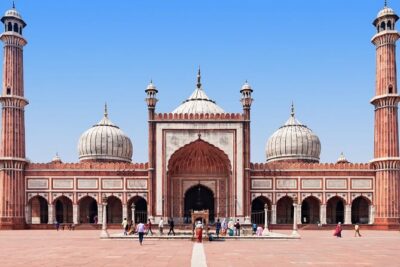
3-Day Delhi, Agra and Jaipur Private Tour – India Golden Triangle
Read our review →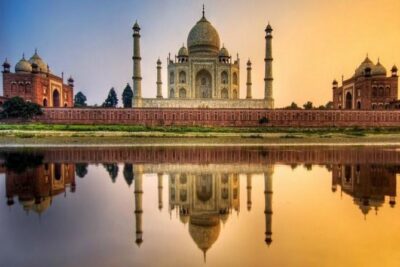
Four-Day Private Luxury Golden Triangle Tour to Agra and Jaipur From New Delhi
Read our review →
5 Nights 6 Days Private Golden Triangle Tour – Delhi Agra Jaipur
Read our review →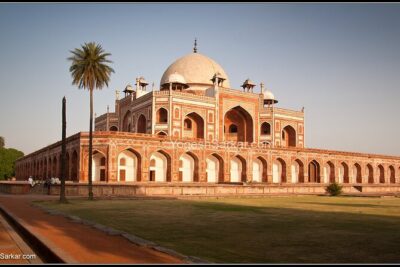

Private Car and Drive for Golden Triangle (4N/5D)
Read our review →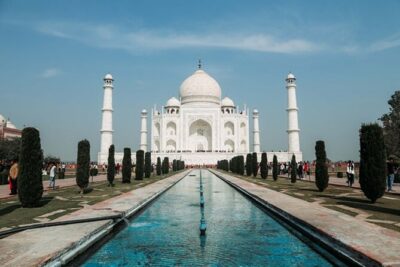
Private Golden Triangle Tour Delhi Agra Jaipur ( Top Rated )
Read our review →Browse the lists this tour appears in