
Reviewed · GOLDEN TRIANGLE TOURS
3-Day Private Golden Triangle Tour: Delhi, Agra & Jaipur
Golden Triangle, three cities, one tight plan. What makes this tour interesting is how it chains major UNESCO sites with practical pacing, plus private comfort in an AC car. I like that you get live guides at the monuments and that the itinerary builds in memorable photo moments, including a very early Taj Mahal sunrise start.
I also like the ground-level logistics: pickup from Delhi-area neighborhoods, an included rickshaw ride in Chandni Chowk, and small perks like umbrellas and bottled water. One drawback to consider is that the schedule is packed with several stops in Day 1, and there can be extra shop or restaurant stops where you may feel nudged to buy something. If you prefer a strict sightseeing-only day, you’ll want to set that expectation up front.
In This Review
- The Golden Triangle Value: Private AC Comfort for Delhi, Agra, and Jaipur
- Key Highlights You Should Actually Care About
- Day 1 in Delhi: Humayun’s Tomb, Qutub Minar, Akshardham, and Jama Masjid
- Chandni Chowk by Rickshaw, Plus a Market Stop That Feels Like Real Delhi
- Delhi Add-Ons: Unknown Soldiers, Lutyens and Baker’s New Delhi, and Gandhi Smriti
- Day 2 Agra Sunrise Taj Mahal: 6 AM Start Plus Agra Fort
- Fatehpur Sikri on the Way to Jaipur: A Long Stop Without the Entry Fee
- Day 3 in Jaipur: Amber Palace, Jal Mahal Views, Jantar Mantar, and Hawa Mahal
- Wrapping Up Jaipur Back Toward Delhi or Jaipur Airport
- What’s Included, What Isn’t, and Why It Changes Your Real Cost
- Guides and Drivers That Matter More Than You’d Think
- Price and Logistics: The Packed Schedule Trade-Off
- Food, Shops, and Staying in Control Near Chandni Chowk
- Who This Tour Suits Best (and Who Should Rethink It)
- Should You Book This Private Golden Triangle Tour?
- FAQ
- What cities does the 3-day Golden Triangle tour cover?
- Where does pickup happen in Delhi and nearby areas?
- Is transportation provided during the tour?
- Are monument entrance fees included?
- What time is the Taj Mahal visit?
- Are there any stops where you cannot enter buildings?
- What is included besides transport and guides?
- What is not included in the tour price?
The Golden Triangle Value: Private AC Comfort for Delhi, Agra, and Jaipur
This is a classic route for a reason. Delhi gives you layers of Mughal, early modern, and colonial-era planning. Agra focuses on the peak of Mughal architecture. Jaipur adds Rajput-era symbolism and a different kind of city geometry.
The big value here is that the tour is private and car-based. You are not hunting taxis between cities or negotiating every segment. The package includes pickup in Delhi, Noida, Gurgaon, Ghaziabad, Faridabad, and nearby areas, plus an air-conditioned private car with a chauffeur. That matters because the Golden Triangle is not a “stay local” trip. Even with a tight itinerary, you’re spending real hours on the road, and AC plus a driver reduces stress.
About price: it’s listed as $5 per person. That’s unusually low for a multi-day private circuit with transport. Treat it as a starting price and confirm exactly what you’re paying for, especially since monument entrance fees depend on the option selected. In other words, don’t assume every ticket is covered automatically just because the tour advertises “admission ticket included” in many spots.
Key Highlights You Should Actually Care About
- Sunrise at the Taj Mahal: a 6 AM start so your photos are taken before the day heats up and crowds fully build.
- Chandni Chowk by rickshaw: the market grid is perfect for a short ride, then you walk the lanes with a guide.
- Multiple UNESCO stops in one loop: Humayun’s Tomb and Qutub Minar in Delhi, plus Agra Fort in Agra, all tied into a clear narrative.
- Photo stops where entrances are restricted: Jal Mahal and Hawa Mahal are described as no-entry viewpoints, so plan for pictures more than interior wandering.
- A guided, time-boxed itinerary: most monuments are slotted around one hour, so you keep momentum instead of getting stuck in one place.
Golden Triangle tours readers book most in New Delhi:
- 3-Days Private Golden Triangle Tour: Delhi, Agra & Jaipur by Car
★ 5.0 · 1,107 reviews - 3-Days Private Golden Triangle Tour: Delhi, Agra & Jaipur by Car
★ 5.0 · 1,098 reviews - 3-Day Delhi, Agra and Jaipur Private Tour – India Golden Triangle
★ 5.0 · 812 reviews
Day 1 in Delhi: Humayun’s Tomb, Qutub Minar, Akshardham, and Jama Masjid
Day 1 is where you get the “Delhi starter pack,” and it’s built around top-tier architecture.
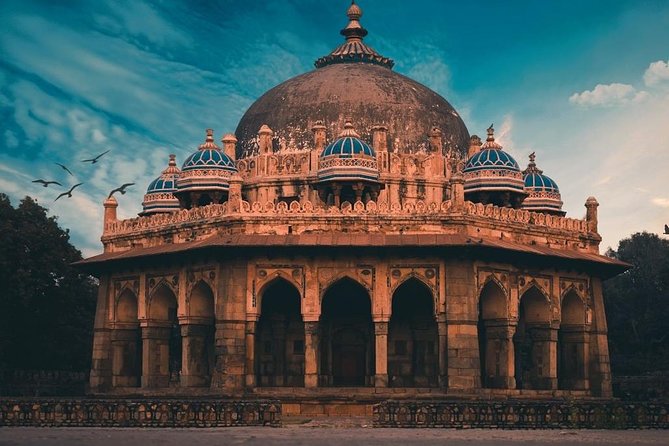
You begin with pickup from your location in the Delhi-area belt in a private AC car. Then the tour moves to Humayun’s Tomb. This is a UNESCO World Heritage site and a famous early garden-tomb concept in India. The guide perspective is helpful here because you can see how symmetry, gardens, and the tomb structure work together as a statement, not just a burial site. Admission is included, and you get about an hour on site.
Next up is Qutub Minar, a UNESCO World Heritage site with the famous tall minaret. The monument is tied to a construction story beginning in the late 1100s era, and the complex around it is a key part of what makes it feel like more than one single tower. Plan for an easy walk, plus time to look up at the details. Admission is included.
Then you roll into Swaminarayan Akshardham, a large Hindu temple complex described as completed in 2005. Even if you approach it as a modern structure, the architecture is meant to feel older in spirit, which is exactly why it works for visitors who want both scale and “where do I look first?” guidance. You’ll have about an hour here with admission included.
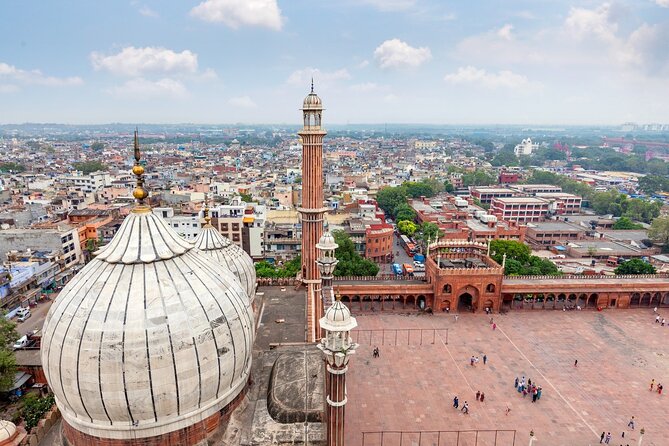
Jama Masjid is a major contrast. It’s one of the world’s largest mosques, built in the mid-1600s, and it sits right in the Chandni Chowk area in front of the Red Fort vicinity. The setting matters because the mosque is not isolated. You’re watching history and daily life interact in the same frame. Admission is included, and you get about an hour.
Chandni Chowk by Rickshaw, Plus a Market Stop That Feels Like Real Delhi
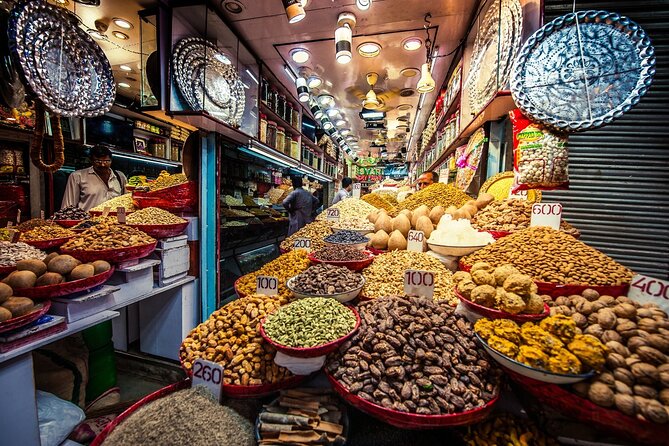
From the mosque area, you head into Chandni Chowk for Pasar Chandni Chowk. This is described as Asia’s biggest and oldest market area from the 17th century, and it’s also known as Chandni Chowk because it stays lit. That little detail is actually useful: it’s a market built for long hours, not just a daytime bazaar.
You get a tuk-tuk or rickshaw ride here, which is a smart choice for Delhi’s lane density. You cover enough ground quickly, then you can walk where the lanes matter. Admission is listed as included for this stop, and you’ll have about an hour.
One timing note in the description is about flea bazaars on Sundays. If your trip lands on a Sunday, it’s worth leaning into the market energy, but still keep your shopping flexible. Chandni Chowk is the kind of place where you can spend hours, and your schedule is already full.
Delhi Add-Ons: Unknown Soldiers, Lutyens and Baker’s New Delhi, and Gandhi Smriti
Between the big monument hits, Day 1 also includes a couple of stops that help the trip feel more grounded than just sightseeing.
There’s a stop at the 1921 Tomb of the Unknown Soldiers, where names of 13,300 Indian army servicemen are carved on the wall for those who died during the First World War. This is the kind of moment that slows the pace in a good way. It gives your Delhi visit emotional weight, especially if you’ve been zooming from one architectural landmark to another.
Another stop is the larger New Delhi planned district, described as a 330-acre architecture developed in 1929, designed by Sir Edwin Lutyens and Herbert Baker. Even if you don’t get a full architecture lecture, the point is clear when you’re standing there: New Delhi’s “designed grid” feeling comes from specific people, not just random colonial-era construction. It’s a great pause from crowded bazaar streets.
Finally, Gandhi Smriti is included. This is the place marking where Gandhi spent much of his life and where he was assassinated. The site notes that it was once the house of a major Indian business family, the Birla family, before it became a remembrance space. You get about an hour, and it works well at the end of Day 1 because it transitions you from monuments to meaning.
A few more New Delhi days to compare
- Old & New Delhi City Tour – Half or Full Day Options Available
★ 5.0 · 4,811 reviews - Half Day Private Delhi City Tour
★ 5.0 · 4,474 reviews - Same Day Taj Mahal, Agra Fort & Baby Taj Tour from Delhi by Car
★ 5.0 · 4,304 reviews - Taj Mahal Day Tour from Delhi by Superfast Train – TOP RATED TOUR
★ 5.0 · 4,166 reviews
Day 2 Agra Sunrise Taj Mahal: 6 AM Start Plus Agra Fort
Day 2 is built around one of the most photo-dependent monuments on earth, and the timing is the whole game. You start early, with pickup from your hotel around 6 AM for sunrise at the Taj Mahal. The plan is to get photos clicked at the best possible spots with help from your guide.
That guidance matters because sunrise light changes fast. You want your angles set quickly, and you want to avoid wasting time walking the wrong direction while the best light slips away. The Taj day is listed as about 3 hours total, and admission is included.
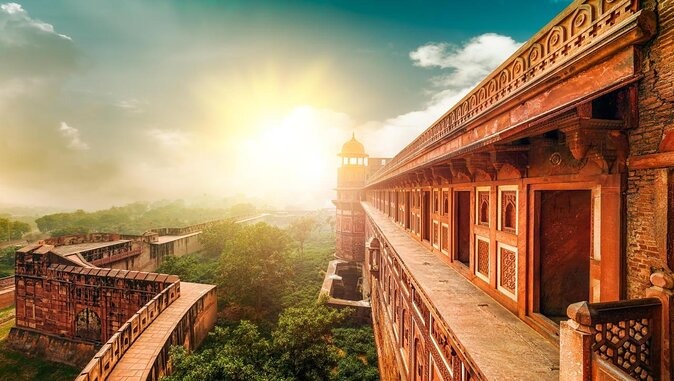
After Taj Mahal, you head to Agra Fort. This UNESCO site is described as the only fort in India where all early Mughal emperors lived until 1638, when the capital shifted back to Delhi. You get roughly an hour here, and it’s a great follow-up to the Taj because it shows the broader power base behind the architecture. If the Taj is the headline, Agra Fort is the supporting cast that helps the story make sense.
Fatehpur Sikri on the Way to Jaipur: A Long Stop Without the Entry Fee
On the route toward Jaipur, the itinerary includes a stop at Fatehpur Sikri for about 4 hours. It’s described as a small city west of Agra founded as Mughal Empire capital in 1571 by Emperor Akbar. The stop is listed as admission free in the description, which makes it a strong value if you’re trying to keep costs predictable.
The time block is generous enough that you’re not just taking a photo and leaving. You can walk slowly, read the atmosphere, and look for the details that make Fatehpur Sikri feel like a capital site, not just a random ruin cluster.
Day 3 in Jaipur: Amber Palace, Jal Mahal Views, Jantar Mantar, and Hawa Mahal
Jaipur starts with Amer Fort, often called Amber Palace. It’s located in Amer, about 11 kilometers from Jaipur city. The itinerary gives you about 2 hours for this stop, and admission is listed as free in the provided schedule.
Amer Fort is a place where you can easily overestimate how much time you’ll need, so the guided timing is helpful. You get enough time to understand layout and stop for pictures without feeling like you’re being rushed out the gate.
Then comes Jal Mahal, the palace on Lake Man Sagar. Important detail: entrance is prohibited at this building. That means your time here is about viewpoints and photos, not exploring inside. You’ll still get the classic shot setup because the fort and lake view combination is the point.
Next you visit Jantar Mantar, the observatory. The description says it’s a collection of nineteen architectural astronomical instruments built by Rajput king Sawai Jai Singh II and completed in the 1700s. You get about an hour. This stop is great if you like science disguised as stone. It’s not just pretty, it’s measuring, predicting, and showing off observational tools in an architectural way.
Finally you reach Hawa Mahal, the Palace of Winds. Entrance is listed as prohibited, but you can take great pictures. The red and pink sandstone look is the main event, and the “no-entry” setup actually keeps your schedule moving. It’s a perfect ending point because it gives you the iconic exterior without turning the day into a museum crawl.
Wrapping Up Jaipur Back Toward Delhi or Jaipur Airport
Your Jaipur sightseeing ends around 2 PM. If you have a departure from Jaipur Airport, you’re set up to go. If you have a departure in New Delhi, the plan is to drive back, with arrival around 8 PM mentioned in the description.
For planning, this means your last day is slightly more flexible than a purely circular itinerary. But it also means you should avoid booking anything too tight right after 2 PM unless you know your exact transfer time.
What’s Included, What Isn’t, and Why It Changes Your Real Cost
The included items are practical and helpful: hotel or airport pickup in Delhi, private air-conditioned transportation with chauffeur, a tuk-tuk or rickshaw ride at Chandni Chowk, live guides at the sites, complimentary water bottles and umbrellas, and monument entrance fees depending on the option selected.
What isn’t included: accommodations, meals, and tips or gratuities.
This is where you should do your own quick math. The monuments themselves are a mix, with some explicitly marked as admission ticket included and some marked free, plus others described as no-entry for interior visits. Your final total depends on what entrance package you pick. So when you’re evaluating the $5 per person price, treat it as a “base” number, and confirm what’s included for tickets at the big paid sites.
Guides and Drivers That Matter More Than You’d Think
This type of tour lives or dies by people who can keep you moving and explain what you’re seeing.
In the best-rated execution shared with the itinerary details, Ishaan is named as the tour guide in Agra, and Amit is named as the driver who guided the Delhi to Agra and Jaipur legs. Even if you don’t get the same names, the lesson is the same: ask your guide to explain not just what a monument is, but why it was built this way and what you should look for first.
A good guide also helps you manage photo angles, especially at sunrise Taj Mahal. That’s the difference between “we saw it” and “we got it right.”
Price and Logistics: The Packed Schedule Trade-Off
A private Golden Triangle tour is convenient, but it’s not leisurely. Day 1 strings together five major stops in Delhi, plus additional cultural sites and the Chandni Chowk market block. Each stop is listed around an hour, but the day still feels like a marathon of “arrive, see, move.”
So the drawback isn’t that the tour is bad. It’s that you won’t have long unstructured time for cafés, rest, or spontaneous detours. If you like to slow down, this itinerary may feel tight. If you like a “greatest hits” plan with guidance, you’ll likely enjoy it.
One more logistics point: the tour mentions complimentary umbrellas. That’s not a gimmick in monsoon season cities. Delhi can swing weather fast, and having an umbrella ready can save you from a damp walk that ruins a temple visit.
Food, Shops, and Staying in Control Near Chandni Chowk
Chandni Chowk is a feast for the senses, but it’s also a shopping magnet. The itinerary includes a market visit, and the Delhi schedule can also include extra stops.
Here’s my practical advice: decide ahead how you want to handle shopping. If you’re here for photos and architecture, tell your guide you will only do short browsing, no pressured purchases. If you do want snacks, plan for simple, quick options so you don’t get stuck waiting while you settle a bill.
This approach protects your time and keeps the day enjoyable instead of transactional.
Who This Tour Suits Best (and Who Should Rethink It)
This private 3-day circuit fits best if you want:
- A guided route connecting Delhi, Agra, and Jaipur without arranging transport yourself
- Early-morning Taj Mahal time for photos
- An AC car with a chauffeur and pickup from your area in the Delhi region
- Monument visits that are time-boxed so you see a lot in a short window
You might rethink it if:
- You need lots of downtime and hate packed schedules
- You dislike any shopping or stopover detours and want strict, monument-only days
- You are traveling with very flexible plans where you want to linger in one city for days
Should You Book This Private Golden Triangle Tour?
Book it if you value structure, convenience, and high-impact monuments. The sunrise Taj Mahal start, the private AC transport, and the guided focus are the strongest reasons to choose this tour. Day 1 also does a nice job of blending major UNESCO sites with Gandhi Smriti and the New Delhi planned district, so it’s not only about stones.
I’d hesitate if the main thing you want is slow travel and free wandering. This itinerary moves, and you’ll need to roll with that. Also, because monument entrances can vary by option, confirm ticket coverage so you don’t get surprised by additional costs once you land.
FAQ
What cities does the 3-day Golden Triangle tour cover?
It covers Delhi, Agra, and Jaipur in a 3-day private tour route.
Where does pickup happen in Delhi and nearby areas?
Pickup is offered from anywhere in Delhi and also from Noida, Gurgaon, Ghaziabad, Faridabad, and nearby areas.
Is transportation provided during the tour?
Yes. You get air-conditioned transportation with a chauffeur, plus a tuk-tuk or rickshaw ride in Chandni Chowk.
Are monument entrance fees included?
Monument entrance fees are included depending on the option selected. Some stops are marked as ticket included, while others are listed as free or with entry prohibited.
What time is the Taj Mahal visit?
The Taj Mahal visit is scheduled for sunrise at around 6 AM, with pickup from your hotel early.
Are there any stops where you cannot enter buildings?
Yes. Entrance is prohibited at Jal Mahal and Hawa Mahal, but you can take pictures there.
What is included besides transport and guides?
Complimentary water bottles and umbrellas are included, and you have live tour guides at the sites.
What is not included in the tour price?
The tour does not include accommodations, meals, or tips and gratuities.
If you want, tell me your travel month and whether you prefer a more relaxed pace or a full “see everything” schedule, and I’ll help you sanity-check whether this timing fits your style.
Recently added around New Delhi
- Private Same day Jaipur Tour from New Delhi★ 5.0 · 82 reviews
- Private Agra Day Tour★ 5.0 · 14 reviews
- Taj Mahal,Agra fort and Baby Taj tour from Delhi by Express train★ 5.0 · 7 reviews
- From Delhi: Full Day TajMahal & Agra Fort with 5 Star Lunch★ 5.0 · 64 reviews
- Taj Mahal & Agra City Private Tour from Delhi by Car – Fast Entry★ 5.0 · 13 reviews
- All Inclusive: Same day Taj Mahal Tour From Delhi★ 5.0 · 111 reviews
- Same Day Tour of Taj Mahal with Our Real Historical Experience★ 5.0 · 42 reviews
- Same Day Agra/Taj Mahal Tour from Delhi : Private & all inclusive★ 5.0 · 38 reviews
Golden Triangle Tours, compared.

3-Days Private Golden Triangle Tour: Delhi, Agra & Jaipur by Car
Read our review →3-Days Private Golden Triangle Tour: Delhi, Agra & Jaipur by Car
Read our review →
3-Day Delhi, Agra and Jaipur Private Tour – India Golden Triangle
Read our review →
Four-Day Private Luxury Golden Triangle Tour to Agra and Jaipur From New Delhi
Read our review →
5 Nights 6 Days Private Golden Triangle Tour – Delhi Agra Jaipur
Read our review →

Private Car and Drive for Golden Triangle (4N/5D)
Read our review →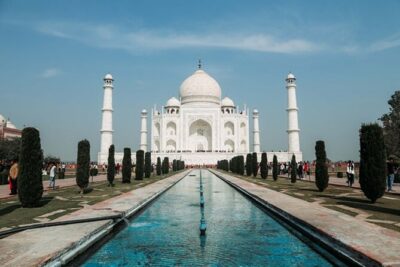
Private Golden Triangle Tour Delhi Agra Jaipur ( Top Rated )
Read our review →Browse the lists this tour appears in